 (opens the live site in a new tab)
Lifetime Property Management
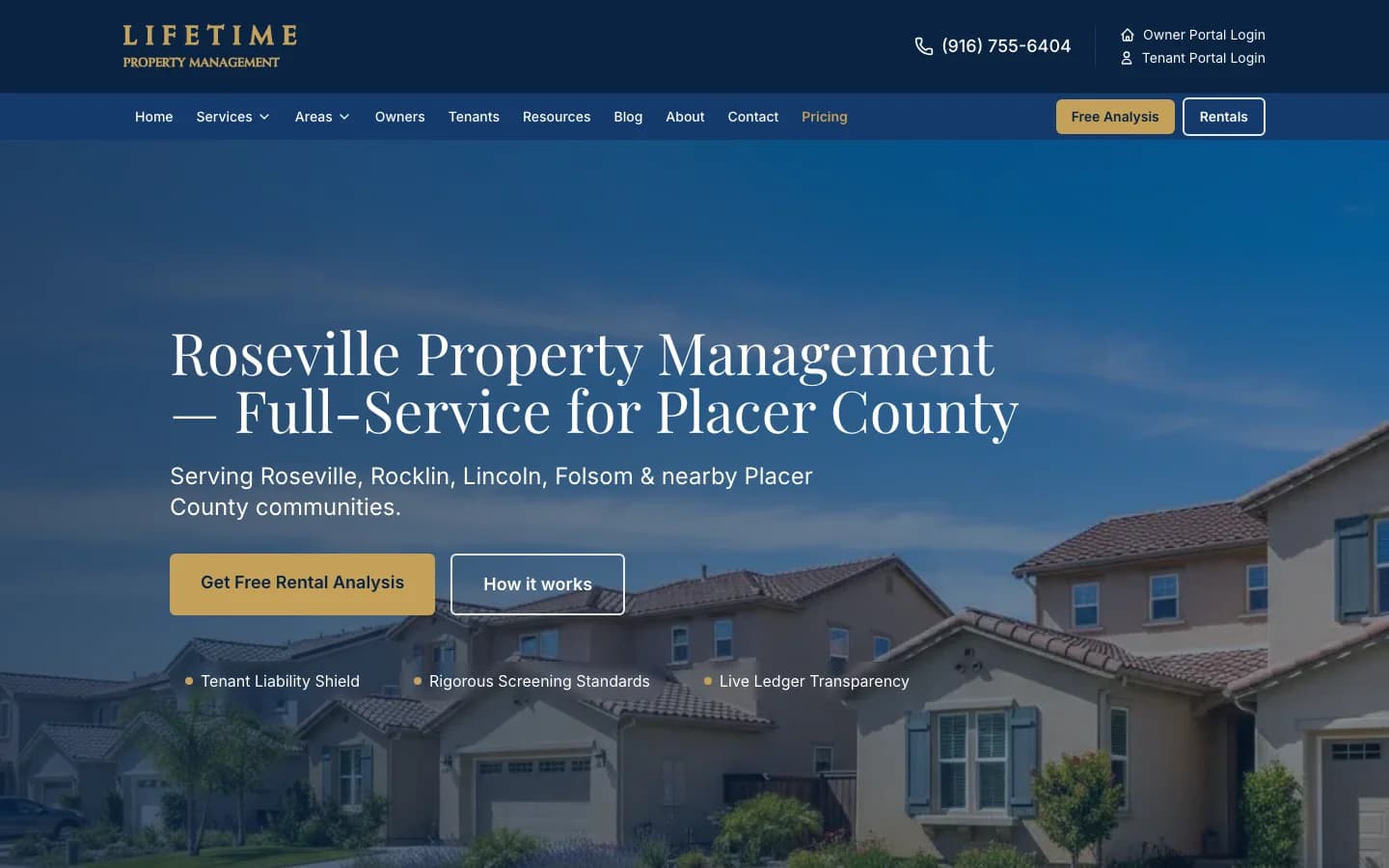
Roseville and Placer County property manager with tenant and owner portals and a rental analysis request.
ADA & WCAG Compliance
ADA website compliance and WCAG 2.1 Level AA remediation that reduces legal risk, expands your audience, and delivers inclusive user experiences for every customer.
Sites we built
Google search clicks, before and after
Search Console, Jun 18–Sep 15, 2026 vs. Mar 20–Jun 17, 2026.
See the workof the top 1,000,000 home pages had detected WCAG 2 failures, per the WebAIM Million 2026 report
the standard we audit and fix against
Your website must be usable by everyone, including people who rely on screen readers, keyboards, and captions. We help you achieve compliance, reduce legal risk, and create inclusive experiences that expand your market.
Website accessibility complaints and lawsuits are a real risk. Our compliance approach helps reduce that risk by addressing barriers proactively and documenting good faith efforts.
People with disabilities are customers too. Accessible websites expand your addressable market, support SEO, and improve the experience for everyone—not just those with disabilities.
Accessibility complaints and lawsuits under the ADA are a real risk for businesses with public websites. Our approach reduces that risk by addressing accessibility barriers before they become legal problems, documenting good-faith efforts, and setting up ongoing monitoring. This is not legal advice; talk to an attorney about your specific exposure.

Millions of people live with disabilities, and many use screen readers, keyboard navigation, captions, or voice control to browse the web. Accessible websites are not just ethical; they are smart business. By removing barriers for users with visual, auditory, motor, and cognitive disabilities, you reach more customers, improve satisfaction, and show that your brand values inclusion.
Accessibility and SEO are deeply intertwined. Search engine crawlers interpret websites much like screen readers do—relying on semantic HTML, descriptive link text, proper heading hierarchy, alt text for images, and clear content structure. Accessibility work often helps SEO because the same practices that help users with disabilities also help search engines understand and rank your content. Accessibility is SEO.

Accessible design principles improve usability for all users, not just those with disabilities. Clear navigation helps everyone find information faster. High color contrast improves readability in bright sunlight. Keyboard shortcuts speed up power users. Captions help in sound-sensitive environments. Accessible forms reduce errors and abandonment. When you design for the edges—people with the most challenging use cases—you create experiences that work better for everyone in the middle.
Comprehensive coverage of accessibility guidelines, legal requirements, and industry best practices
Americans with Disabilities Act requirements for websites as places of public accommodation, following DOJ guidance and federal court precedents.
Web Content Accessibility Guidelines 2.1 at Level AA conformance—the internationally recognized standard and legal benchmark for web accessibility.
Federal accessibility standards required for government agencies and contractors, aligned with WCAG 2.0 Level AA with additional requirements.
Screen reader compatibility, proper semantic HTML, descriptive labels, color contrast ratios, and support for screen magnification and high-contrast modes.
Full keyboard navigation, visible focus indicators, adequate click target sizes, no time limits on interactions, and support for voice control and switch devices.
Captions and transcripts for multimedia, clear language and instructions, logical content structure, consistent navigation, and error prevention and recovery.
Recent Verlua builds, shown as live sites you can open and check.
(opens the live site in a new tab)Roseville and Placer County property manager with tenant and owner portals and a rental analysis request.
 (opens the live site in a new tab)
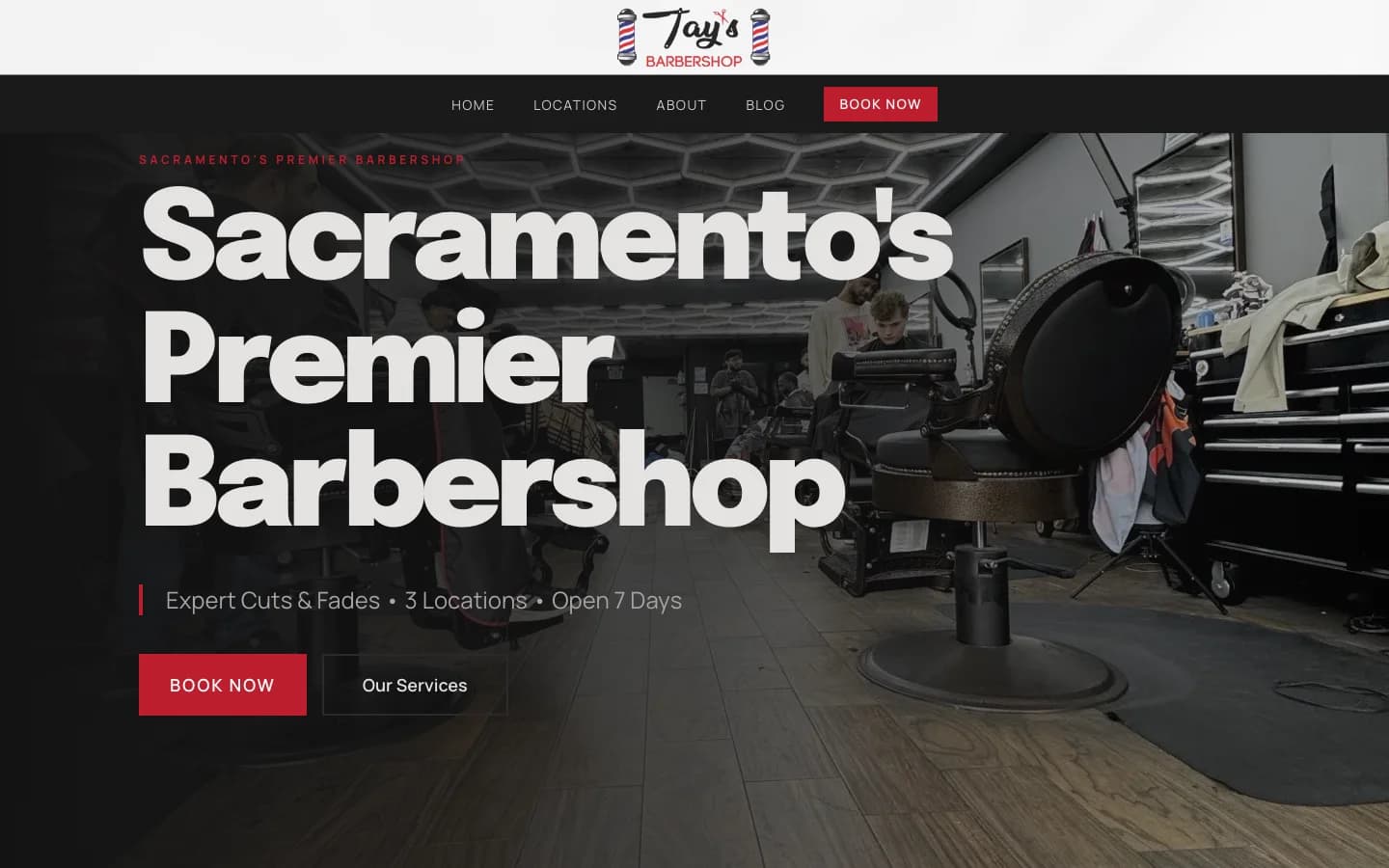
Three-location Sacramento barbershop with a page for each location, service menus, and online booking.
 (opens the live site in a new tab)
A comprehensive, risk-focused approach to achieving and maintaining WCAG 2.1 Level AA compliance
We begin with a thorough audit combining automated scanning tools with expert manual testing. Our team evaluates WCAG 2.1 Level AA conformance across all page templates, tests with multiple screen readers, assesses keyboard navigation, checks color contrast, and reviews all interactive elements.
We develop a strategic remediation roadmap that prioritizes high-impact fixes, addresses legal risk areas first, and aligns with your development capacity. We identify quick wins, plan phased implementation for complex issues, and establish success metrics.
Our developers and designers implement accessibility fixes across your codebase and design system. We update semantic HTML, add proper ARIA attributes, fix color contrast issues, enhance keyboard navigation, improve form labels, add alt text, and ensure all interactive elements are fully accessible.
We conduct rigorous testing with assistive technologies including multiple screen readers (JAWS, NVDA, VoiceOver), keyboard-only navigation, voice control, screen magnification, and browser extensions. We test across devices, browsers, and real user scenarios to validate compliance.
We provide comprehensive documentation including an accessibility statement, remediation summary, and ongoing maintenance guidelines. We train your team on accessible content creation, design practices, and development standards to maintain compliance long-term.
Accessibility requires continuous attention as your site evolves. We establish monitoring processes, conduct periodic audits, provide priority support for new features, and keep you informed of WCAG updates and industry best practices to ensure sustained compliance.
Everything you need to achieve compliance, protect your business, and maintain accessibility long-term
Detailed documentation of all accessibility issues organized by WCAG 2.1 criterion, including severity ratings, affected user groups, code examples, and specific remediation guidance for each violation.
Fully accessible code meeting WCAG 2.1 Level AA standards with proper semantic HTML, ARIA attributes, keyboard navigation, color contrast, form labels, and assistive technology compatibility.
Public-facing statement documenting your commitment to accessibility, conformance level, testing methods, known issues, and contact information for users to report accessibility barriers.
Comprehensive guidelines covering accessible design patterns, content authoring, development standards, testing procedures, and governance processes to maintain compliance long-term.
Role-specific training for designers, developers, content creators, and QA teams covering accessibility principles, WCAG requirements, assistive technology testing, and best practices.
Complete testing results from automated tools, manual evaluation, screen reader testing (JAWS, NVDA, VoiceOver), keyboard navigation, color contrast analysis, and cross-browser validation.
Documentation suitable for legal review including conformance reports, remediation timeline, testing methodology, third-party validation results, and evidence of good faith compliance efforts.
Updated component library with accessible UI patterns, color palettes meeting contrast requirements, focus indicators, ARIA patterns, and usage guidelines for building accessible interfaces.
Automated monitoring tools integrated into your workflow, CI/CD accessibility testing, regular audit schedules, and alert systems to catch new accessibility issues before they reach production.
Explore our comprehensive suite of services designed to deliver exceptional results
Modernize your site with accessibility built in from the start
Custom, mobile-first website design built to rank and convert
Ongoing monitoring to maintain accessibility compliance
View our complete range of website design and development services
Everything you need to know about ADA compliance, WCAG standards, and website accessibility
ADA compliance for websites means ensuring your digital properties meet the accessibility standards outlined in the Americans with Disabilities Act. While the ADA does not specify exact technical requirements, courts and the Department of Justice reference WCAG (Web Content Accessibility Guidelines) 2.1 Level AA as the standard. This includes providing text alternatives for images, ensuring keyboard navigation, maintaining sufficient color contrast, and making all functionality accessible to assistive technologies like screen readers.
If your business is considered a place of public accommodation under Title III of the ADA—which courts have increasingly interpreted to include websites—then yes, your website should be accessible. This applies to most businesses open to the public, especially those with physical locations. Even if not legally required, accessibility best practices expand your audience, improve SEO, and demonstrate social responsibility. Companies in industries like retail, healthcare, education, finance, and hospitality face the highest litigation risk.
WCAG (Web Content Accessibility Guidelines) are international standards developed by the W3C. WCAG 2.1 has three levels: Level A (minimum), Level AA (mid-range, most commonly required), and Level AAA (highest). Level AA compliance is the commonly used standard, addressing issues like color contrast, keyboard accessibility, form labels, and video captions. WCAG 2.2, released in 2023, adds additional criteria for mobile accessibility and cognitive disabilities.
Yes. Website accessibility lawsuits have surged in recent years, with thousands filed annually under the ADA. Plaintiffs typically argue that inaccessible websites prevent people with disabilities from accessing goods and services. Even automated accessibility overlays do not provide full legal protection. The best defense is proactive compliance: conducting thorough audits, remediating issues according to WCAG 2.1 Level AA, documenting your efforts, and maintaining ongoing monitoring and updates.
Cost depends on site size, complexity, and current accessibility state, so we scope after an initial assessment. We provide a written quote covering the audit, fixes, and any ongoing monitoring before work starts. Proactive compliance work is usually less disruptive than responding to a complaint after the fact.
Timeline depends on your site size and the extent of accessibility issues. A comprehensive accessibility audit takes 1-2 weeks. Remediation for a small to medium site with moderate issues typically takes 4-8 weeks, including design updates, code changes, content revisions, and testing. Larger sites or those requiring significant restructuring may take 10-16 weeks. We prioritize high-impact fixes first so you can address the most critical barriers quickly while working toward full compliance.
Our comprehensive accessibility audits combine automated scanning tools with expert manual testing. We evaluate WCAG 2.1 Level AA conformance across all page templates, test with screen readers (JAWS, NVDA, VoiceOver), assess keyboard navigation, check color contrast ratios, review semantic HTML structure, test forms and interactive elements, evaluate multimedia content, and verify mobile accessibility. You receive a detailed report documenting all issues, prioritized by severity and user impact, with specific remediation guidance.
No. Automated accessibility overlay widgets that promise instant compliance are widely criticized by accessibility experts and provide limited actual benefit. They do not fix underlying code issues, often create new barriers for assistive technology users, and do not protect you from legal liability. Courts have dismissed overlay solutions as insufficient. True accessibility requires proper semantic HTML, ARIA attributes, thoughtful design decisions, and comprehensive testing—changes that must be made to your actual codebase and content.
Accessibility is ongoing, not a one-time project. After initial remediation, we provide comprehensive documentation, train your team on accessible content creation, establish governance processes, and set up monitoring to catch new issues. Many clients choose ongoing support plans that include quarterly audits, priority support for new features, and monitoring of WCAG updates. We also help you create and maintain an accessibility statement that documents your commitment and provides users a way to report issues.
Maintaining accessibility requires process integration and team education. We help you establish content guidelines for writers, design standards for designers, and coding practices for developers. We recommend integrating automated testing into your CI/CD pipeline, conducting annual comprehensive audits, training new team members on accessibility principles, documenting your accessibility processes, and staying current with WCAG updates. Our ongoing support plans provide regular monitoring, priority remediation for new issues, and continuous team training to keep your site compliant as it evolves.
Do not wait for a lawsuit to take accessibility seriously. Let us help you achieve WCAG 2.1 Level AA compliance, reduce legal risk, and create inclusive experiences that expand your market.