Strategic Keyword Research
Keyword Research Services for Smarter Content
Our keyword research services uncover exactly what your buyers search for and map those terms to the right pages, so every piece of content can capture high-intent traffic and leads.
- Businesses served
- 50+
- Projects delivered
- 150+
- Google rating
- 5★
Sites we built
Google search clicks, before and after
- Colfax GlassWindows and glass+408%265 → 1,346
- Rocklin Gutter GuardGutter guards and gutter cleaning+401%173 → 866
- NorCal EarthworksDemolition, excavation and land clearing+1,196%25 → 324
Search Console, Jun 18–Sep 15, 2026 vs. Mar 20–Jun 17, 2026.
See the workStrategic Keyword Research That Drives Measurable Growth
Keyword research is the foundation of every successful SEO and content strategy. Without it, you are guessing. With it, you know exactly what to create.
Data-Driven Discovery
We use Semrush, DataForSEO, and Search Console data to find the keywords that matter—from high-volume head terms to long-tail phrases your competitors miss.
Strategic Implementation
Our research delivers actionable roadmaps, not just spreadsheets. You get organized keyword clusters, search intent mapping, and clear guidance on exactly what content to create or optimize.
Deep Audience & Intent Analysis
Great keyword research starts with understanding your audience. We analyze search behavior patterns, user personas, and the questions your potential customers are asking at every stage of their journey. Our intent analysis goes beyond basic keyword discovery to uncover the true motivations behind searches, ensuring your content aligns perfectly with user needs.

Comprehensive Keyword Discovery & Clustering
We cast a wide net to discover every relevant keyword opportunity, then organize them strategically using advanced clustering techniques. Our approach combines multiple data sources to identify not just head terms, but the long-tail keywords that drive qualified traffic. Clustering ensures you can target multiple related keywords with focused, authoritative content.

Competitive Keyword Intelligence
Understanding what keywords your competitors rank for—and where they have gaps—gives you a strategic advantage. We perform deep competitive analysis to uncover their keyword strategies, content weaknesses, and ranking vulnerabilities. This intelligence reveals exactly where you can outrank competitors and capture market share through targeted content.
Strategic Content & Page Mapping
Keywords without a clear implementation plan are just data. We map every keyword cluster to specific content pieces, landing pages, or optimization opportunities, creating a clear roadmap for execution. Our mapping considers existing content performance, keyword cannibalization risks, and the optimal content structure to maximize topical authority and ranking potential.

Google Search Console
Keyword Targeting, Shown in Search Console
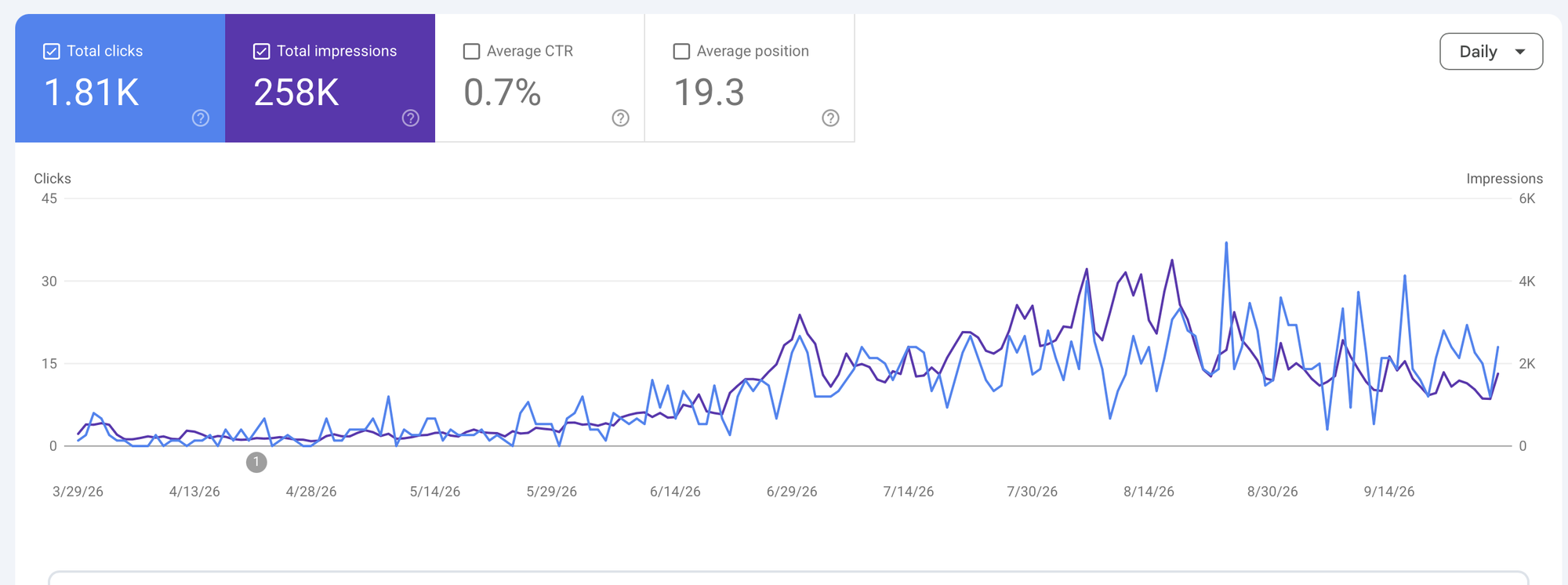
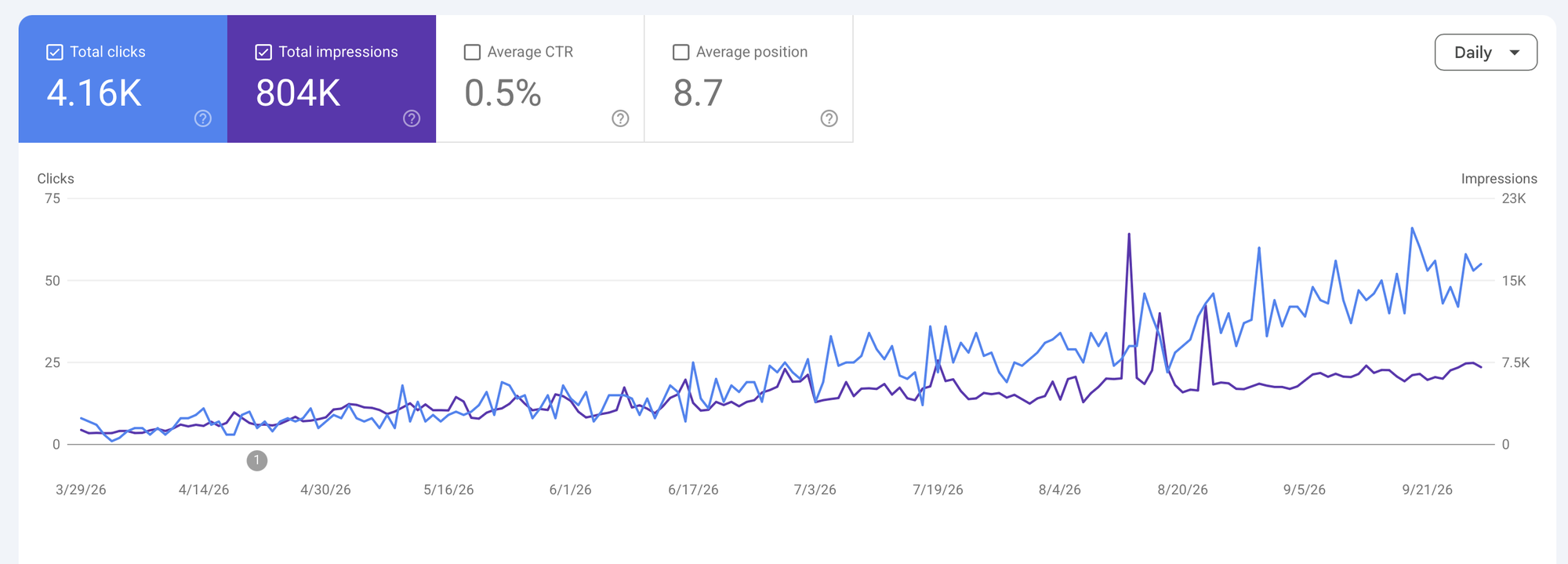
Keyword research decides which pages get built. These Google Search Console reports are from sites Verlua built around the searches their customers use. They show clicks and impressions, not leads or sales.
 (opens the full-size screenshot)
Window and glass contractor, Placer County
45 → 450Google clicks: first 4 weeks vs. last 4 weeks of the chart
1,811 clicks · 257,832 impressions · Mar 29 – Sep 28, 2026
Read the Colfax Glass case study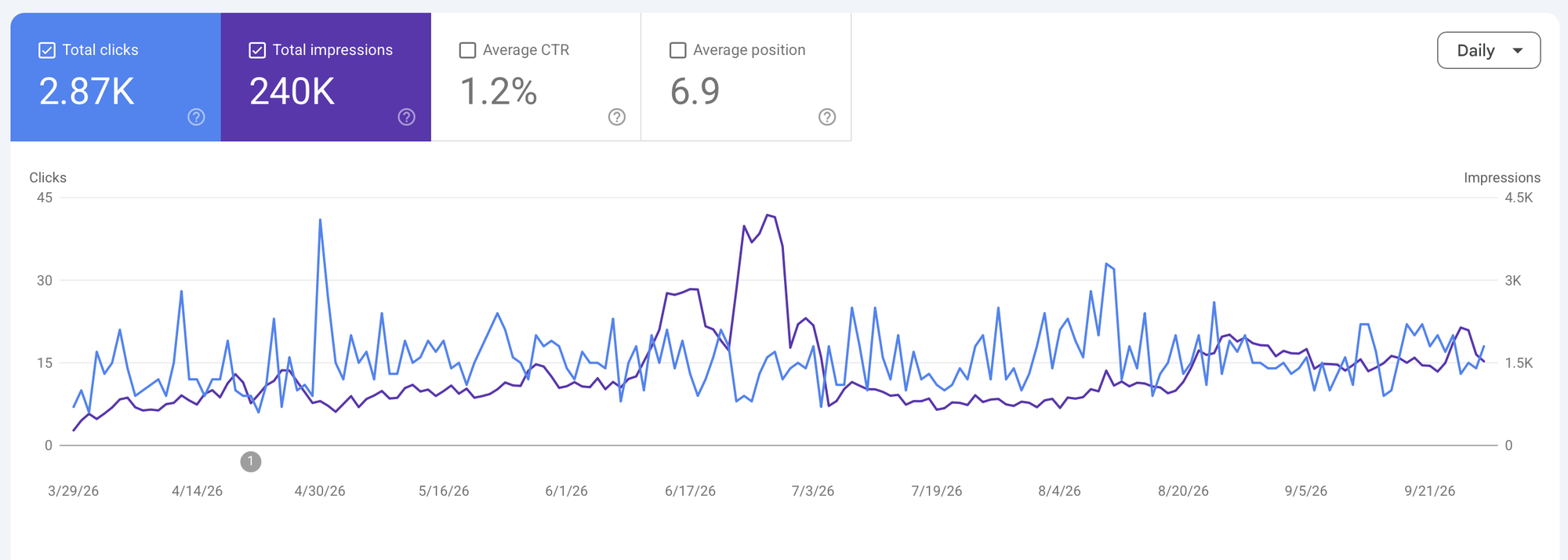 (opens the full-size screenshot)
Sacramento barbershop, three locations
~15 a dayGoogle clicks, steady for six months
2,868 clicks · 240,375 impressions · Mar 29 – Sep 28, 2026
 (opens the full-size screenshot)
Raw honey producer and online store, Northern California
162 → 1,328Google clicks: first 4 weeks vs. last 4 weeks of the chart
4,160 clicks · 803,922 impressions · Mar 29 – Sep 28, 2026
Read the NorCal Nectar case studyBlue line: clicks, people who came to the site from GooglePurple line: impressions, times the site showed up in results
Screenshots from Google Search Console (Performance report, web search), captured September 30, 2026. Search traffic only, not lead or sales counts. Select any chart to open it full size.
Our Keyword Research Process
A systematic approach that uncovers opportunities, organizes insights, and delivers actionable strategy
Discovery & Audience Analysis
We begin by understanding your business, audience, competitive landscape, and goals. This includes customer persona mapping, identifying key service or product categories, and defining what success looks like for your keyword strategy.
Deliverables
Comprehensive Keyword Discovery
Using Semrush, DataForSEO, and Search Console data, we find the keyword opportunities that matter. This includes head terms, long-tail variations, question keywords, and related topics across the full customer journey.
Deliverables
Intent Analysis & Clustering
We analyze search intent for every keyword and organize them into strategic clusters grouped by topic and user intent. This ensures your content can target multiple related keywords while providing comprehensive coverage of each topic.
Deliverables
Competitive Keyword Analysis
Deep analysis of 3-5 primary competitors reveals their keyword strategies, content gaps, and ranking vulnerabilities. We identify keywords they rank for that you dont, and opportunities where you can outrank them with better content.
Deliverables
Content & Page Mapping
We map keyword clusters to your existing content and identify gaps requiring new content creation. Each page receives primary and secondary keyword assignments, optimization guidance, and internal linking recommendations.
Deliverables
Strategy Delivery & Ongoing Tracking
Final delivery includes organized keyword database, strategic implementation roadmap, and tracking dashboard setup. We provide clear next steps, priority recommendations, and optional ongoing monitoring to track performance and identify new opportunities.
Deliverables
Complete Keyword Research Deliverables
Everything you need to execute a winning keyword strategy and dominate organic search
Complete Keyword Database
Spreadsheet of keywords with search volume, difficulty scores, CPC estimates, search intent classification, and competitive analysis for each term.
Competitor Analysis Report
Detailed competitive intelligence revealing what keywords competitors rank for, their content gaps, ranking vulnerabilities, and opportunities for you to capture market share.
Search Intent Mapping
Every keyword classified by search intent (informational, navigational, commercial, transactional) and mapped to appropriate funnel stages for strategic content planning.
Content Opportunity Analysis
Prioritized list of content opportunities with keyword cluster assignments, search volume potential, difficulty assessment, and business value scoring.
Page-to-Keyword Mapping
Strategic mapping assigning primary and secondary keywords to existing pages, with optimization recommendations and guidance on content gaps requiring new pages.
Keyword Priority Matrix
Visual prioritization framework scoring keywords by opportunity, difficulty, business value, and quick-win potential to guide implementation sequencing.
Semantic Keyword Clusters
Keywords organized into topical clusters that allow you to target multiple related terms with comprehensive, authoritative content pieces.
SEO Content Roadmap
Quarterly content plan with specific topics, assigned keyword clusters, content types, and priority sequencing to guide your editorial calendar.
Tracking & Monitoring Setup
Dashboard configuration for ongoing keyword rank tracking, competitor monitoring, and performance measurement to guide optimization efforts.
Complete SEO & Content Strategy Services
Use keyword insights across your entire digital marketing ecosystem
SEO for E-Commerce
Apply keyword research to product pages, categories, and e-commerce content strategy.
Conversion Rate Optimization
Test messaging and copy variations informed by search intent and keyword research.
Analytics & Tracking Setup
Track keyword performance, rankings, and conversions with comprehensive analytics.
Page Speed Optimization
Fast pages rank better. Combine keyword targeting with technical performance optimization.
Custom Web Development
Build SEO-optimized sites architected around your keyword strategy and content plan.
Website Design
Design landing pages and content layouts optimized for target keywords and user intent.
Frequently Asked Questions
Everything you need to know about our keyword research services
How long does keyword research take?
A keyword research project typically takes a few weeks from discovery to delivery. That covers audience analysis, competitor research, keyword discovery, clustering by search intent, and mapping to pages. Larger sites and competitive industries take longer, and we confirm the timeline before we start.
What tools do you use for keyword research?
We use Semrush and DataForSEO for search volume, difficulty, and live results data, plus Google Search Console for the queries your site already earns impressions for. We analyze search results directly to judge intent and to see what is already ranking.
How do you determine search intent?
We analyze search intent through a combination of SERP analysis, content type evaluation, query modifier patterns, and user behavior data. We classify keywords into four primary intent categories: informational (learning), navigational (finding), commercial (researching), and transactional (buying). This intent mapping ensures your content aligns perfectly with what searchers are actually looking for at each stage of their journey.
How many keywords will you deliver?
The count depends on your industry and goals, and quantity is secondary to quality. We prioritize keywords by search volume, difficulty, and business fit, then group them into clusters mapped to specific pages. You receive a plan you can act on, not a raw data dump.
Do you include competitor keyword analysis?
Yes. Competitor analysis is part of the research. We pick the competitors that actually show up for your target searches, then look at the keywords they rank for, the content gaps, and the opportunities they are missing. The goal is to find searches you can realistically win.
Will you map keywords to existing content?
Yes! We perform comprehensive content-to-keyword mapping for your existing pages, identifying optimization opportunities, keyword cannibalization issues, and content gaps. Each page receives primary and secondary keyword recommendations based on current performance and strategic fit. We also provide clear guidance on whether to optimize existing content or create new content for specific keyword clusters.
What is keyword clustering and why does it matter?
Keyword clustering groups related keywords by topic and search intent, allowing you to create comprehensive content that targets multiple related keywords simultaneously. This approach improves topical authority, reduces content duplication, and aligns with how modern search engines understand semantic relationships. Clustering also makes your content strategy more efficient—one well-optimized page can rank for dozens of related terms.
How do you prioritize keyword opportunities?
We score keywords on search volume, difficulty, business value, and how competitive the current results are. High-priority keywords pair real demand with a realistic chance to rank and a clear tie to revenue. We also consider your site's current authority so recommendations are doable, not aspirational.
Can keyword research help with paid search campaigns?
Yes. Research on commercial keywords also helps paid search. We can flag high-intent terms, share search volume and cost-per-click estimates, and point out long-tail terms that often cost less per click.
Do you provide ongoing keyword tracking and monitoring?
Yes! Beyond initial research, we can set up ongoing keyword tracking dashboards that monitor your rankings, track competitor movements, identify new keyword opportunities, and measure the performance of implemented strategies. We use tools like Google Search Console, rank tracking platforms, and analytics integrations to provide monthly reports showing progress, wins, and new opportunities based on changing search behavior and competition.
Ready to Uncover Your Biggest Keyword Opportunities?
Let's discover the exact keywords your audience is searching for and create a strategic roadmap that transforms search visibility into measurable business growth.