Wireframing Services for Clear, User-Centered Layouts
Wireframing services that align stakeholders, clarify structure, and define intuitive user flows before you invest in full design and development.
reduction in late-stage design revisions with wireframes
faster to iterate wireframes than high-fidelity designs
of usability issues caught during wireframe testing
Reduce Risk and Align Teams Before Design Investment
Wireframes are your insurance policy against expensive mistakes. They validate structure, flows, and priorities when changes are fast and cheap—not when code is already written.
Clarity and Alignment
Wireframes create shared understanding across stakeholders, designers, and developers by focusing on structure and functionality without the distraction of visual design preferences.
Faster Iteration
Changes that take minutes in wireframes take hours in high-fidelity design and days in code. Testing structure early dramatically accelerates overall project timelines.
Clarify Structure Before Design Investment
Wireframes establish page structure, content hierarchy, and navigation patterns without the distraction of colors, fonts, or imagery. This allows stakeholders to focus on what matters first: does the layout support user goals? Is information organized logically? Does navigation make sense? By validating structure early with low-cost wireframes, you prevent expensive redesigns later when high-fidelity mockups or code are already complete.
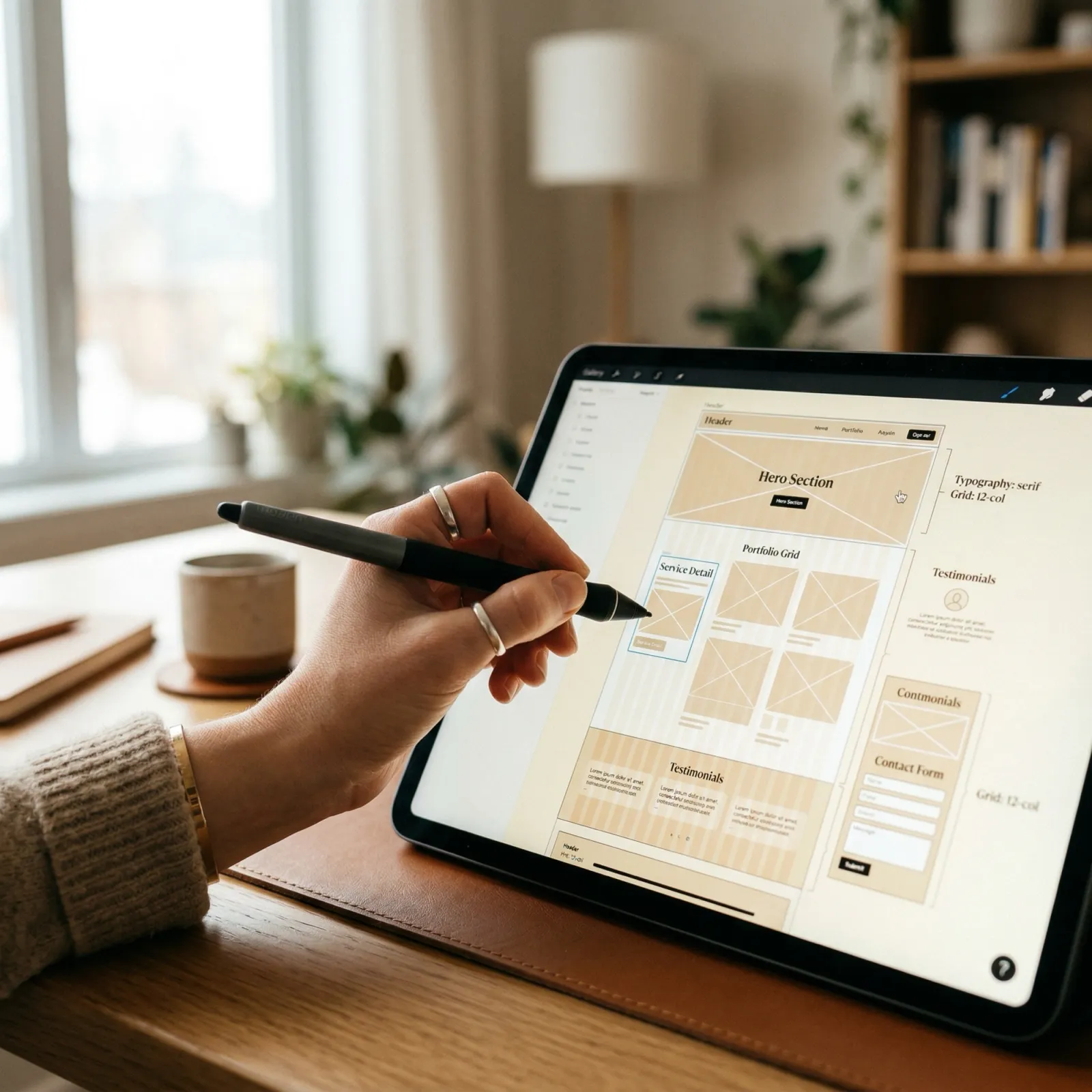
Align Stakeholders Early and Often
Wireframes are a powerful alignment tool that get stakeholders on the same page about product direction, content needs, and user flows. By reviewing simple, grayscale layouts together, teams can debate priorities, discuss edge cases, and reach consensus without getting derailed by subjective design opinions. This early alignment prevents scope creep, reduces late-stage conflicts, and ensures everyone understands what is being built before development begins.

Define and Validate User Flows
Wireframes map complete user journeys through your product—from entry point to goal completion, including all decision points, branches, and edge cases. By wireframing entire flows rather than isolated screens, we ensure smooth, logical progressions that guide users intuitively toward success. Flow-based wireframing reveals gaps, dead ends, and friction points that would otherwise surface during development or worse, in production after launch.
Streamline Collaboration and Feedback
Our wireframes are built in collaborative tools like Figma where stakeholders can review, comment, and suggest changes in real-time. Contextual commenting keeps feedback organized and attached to specific screens or elements. Version history tracks changes over time. Real-time collaboration means teams can review together during meetings, see updates instantly, and iterate rapidly without endless email chains or meeting cycles.
Types of Wireframes We Create
Different project stages call for different wireframe fidelity levels
Low-Fidelity Wireframes
Simple, grayscale layouts focusing on structure and hierarchy. Perfect for rapid exploration, early stakeholder alignment, and quick iteration.
- Basic boxes and placeholders
- Content hierarchy definition
- Navigation structure
- Fastest iteration cycles
Mid-Fidelity Wireframes
Detailed layouts with actual content, spacing, and component specs. Ideal for stakeholder approval and design handoff while maintaining flexibility.
- Real content placement
- Component definitions
- Interaction annotations
- Responsive breakpoints
Interactive Prototypes
Clickable wireframes simulating user flows and interactions. Essential for usability testing and stakeholder demonstrations.
- Clickable user flows
- Navigation testing
- Usability validation
- Stakeholder demos
Trusted by Teams Building Better Products


Real Results Through Strategic Wireframing
See how wireframing reduced risk, accelerated timelines, and improved outcomes for our clients.
SaaS Onboarding Flow Optimization
CloudMetrics Platform
Wireframed a complete onboarding redesign for a B2B analytics platform, mapping 12 distinct user flows based on user roles and use cases. Low-fidelity wireframes helped stakeholders visualize the new structure and test with users before design work began.
Technologies
Our Wireframing Process
A structured approach that moves from rough concepts to detailed specifications
Discovery & Requirements
We begin by understanding your users, business goals, and project requirements through stakeholder interviews and documentation review. We identify key user personas, define primary user flows, gather content requirements, and review any existing research or analytics to inform wireframing decisions.
Deliverables
User Flow Mapping
Before wireframing individual screens, we map complete user journeys from entry to goal completion. Flow diagrams identify all touchpoints, decision points, branches, and states users will encounter. This ensures wireframes account for the complete experience, not just isolated screens.
Deliverables
Low-Fidelity Wireframing
We create low-fidelity wireframes establishing page structure, content placement, and basic layout patterns. These grayscale, simplified layouts focus on hierarchy and functionality without design details. Low-fi wireframes are perfect for rapid iteration and early stakeholder feedback.
Deliverables
Mid-Fidelity Wireframing
After structural approval, we develop mid-fidelity wireframes adding detail, real content placement, spacing, component specifications, and interaction definitions. Mid-fi wireframes provide clear specifications for designers and developers while remaining flexible for iteration.
Deliverables
Clickable Prototypes
We connect wireframes into clickable prototypes that simulate the actual user experience. Stakeholders and users can click through flows, test navigation, and validate functionality before design begins. Prototypes are invaluable for usability testing and stakeholder demonstrations.
Deliverables
Review, Iteration & Handoff
Final review cycles incorporate stakeholder feedback and refine details. We prepare comprehensive handoff documentation including annotated wireframes, specifications, and design recommendations. Wireframes are organized, documented, and ready for visual design or development handoff.
Deliverables
Complete Wireframing Deliverables
Everything you need to move confidently from wireframes to design and development
Complete Wireframe Screens
All necessary page layouts and screen states wireframed at the agreed fidelity level, covering desktop, tablet, and mobile breakpoints.
Interactive Prototypes
Clickable prototypes demonstrating key user flows, navigation patterns, and interactions for testing and stakeholder review.
User Flow Diagrams
Visual maps of complete user journeys showing navigation paths, decision points, and connections between screens.
Detailed Annotations
Comprehensive notes explaining functionality, content requirements, interaction behaviors, and design rationale for every element.
Component Specifications
Documented specifications for reusable UI components including states, variations, and usage guidelines for consistency.
Responsive Layouts
Wireframes for all key breakpoints showing how layouts adapt and content reflows across mobile, tablet, and desktop.
Organized Figma Files
Well-structured Figma source files with clear naming, organized layers, and pages grouped logically for easy navigation.
Handoff Documentation
Summary documents outlining design decisions, user flow rationale, and recommendations for the visual design phase.
Technical Feasibility Notes
Technical considerations and implementation notes for development teams to understand complexity and requirements early.
Related Services
Explore our full suite of UI/UX design services to create exceptional digital experiences
UX Research
In-depth research to uncover user behaviors and validate wireframe concepts with real users.
Prototyping
Transform wireframes into interactive prototypes for testing and stakeholder presentations.
UI Design
Bring wireframes to life with beautiful, pixel-perfect visual design and brand alignment.
Design Systems
Scale wireframe patterns into reusable component libraries for consistent products.
Website Design
Convert wireframes into beautiful websites with strategic design and development.
Product Strategy
Strategic planning to ensure wireframes align with business goals and user needs.
What Our Clients Say About Our Wireframing
Real feedback from teams who experienced the value of proper wireframing
“The wireframing process saved us months of potential rework. By validating structure and flows early, we caught major issues before design and development. The collaborative approach kept our entire team aligned throughout the project.”
David Thompson
Product Director at TechFlow Solutions

“Outstanding wireframing work! The team mapped our complex onboarding flows with incredible attention to detail. The clickable prototypes were instrumental in securing stakeholder buy-in and guiding our design team.”
Rachel Martinez
Head of UX at DataCloud Analytics

“The wireframes provided perfect clarity for our development team. Every interaction was documented, every edge case considered. We experienced virtually zero rework thanks to the thorough wireframing foundation.”
James Patterson
Engineering Lead at HealthTrack Systems

Frequently Asked Questions
Everything you need to know about our wireframing services
What is the difference between low-fidelity and mid-fidelity wireframes?
Low-fidelity wireframes are basic sketches focusing on layout structure, content hierarchy, and navigation flow without detailed design elements. They use simple boxes, placeholders, and grayscale to communicate structure quickly. Mid-fidelity wireframes add more detail including actual content placement, spacing, component definitions, and interaction patterns while still avoiding final visual design. Low-fi is perfect for early exploration and quick iteration, while mid-fi bridges the gap between structure and visual design, providing clearer specifications for designers and developers.
How long does the wireframing process take?
Wireframing timelines vary based on project scope and complexity. A simple 5-page website can be wireframed in 3-5 days, including stakeholder review cycles. A complex web application with multiple user flows and 20+ unique screens typically takes 2-3 weeks. SaaS products or enterprise applications with intricate workflows may require 3-4 weeks of wireframing to properly map all states, flows, and edge cases. We always provide timeline estimates during discovery based on your specific requirements and desired fidelity level.
What tools do you use for wireframing?
We primarily use Figma for wireframing due to its collaborative features, real-time commenting, and smooth handoff capabilities. Figma allows stakeholders to review wireframes in their browser, leave contextual feedback, and see updates in real-time. For rapid sketching and early concept exploration, we sometimes use Balsamiq or Whimsical. For complex flow diagrams and user journey mapping that complement wireframes, we use FigJam or Miro. All final wireframe deliverables are provided in Figma with organized layers, components, and annotations.
Can wireframes be used for user testing?
Yes — Wireframes are excellent for early-stage user testing because they allow you to validate structure, flow, and content hierarchy before investing in full design and development. Low-fidelity wireframes work well for concept validation and navigation testing. Mid-fidelity clickable wireframes are ideal for usability testing of specific flows like checkout, onboarding, or complex workflows. Testing with wireframes is faster and more cost-effective than testing high-fidelity designs, and findings can inform design decisions before visual work begins. We can facilitate wireframe-based usability testing as part of our service.
How many revision rounds are included?
Our standard wireframing packages include 2-3 structured revision rounds. The first revision round addresses major structural changes, navigation updates, and content hierarchy adjustments based on initial stakeholder feedback. The second round focuses on refinements, edge case handling, and detailed interaction clarifications. A final review round ensures all feedback has been incorporated and wireframes are ready for design handoff. Additional revision rounds can be added if project scope expands or new requirements emerge. We work collaboratively to iterate efficiently and achieve stakeholder alignment.
What is included in wireframe deliverables?
Complete wireframe deliverables include organized Figma files with all screens and states, clickable prototypes demonstrating key user flows and interactions, detailed annotations explaining functionality and content requirements, component specifications for reusable elements, responsive breakpoint views for mobile/tablet/desktop, user flow diagrams showing navigation paths, and a comprehensive notes document outlining design decisions and rationale. You receive full access to source files, can invite team members to review, and have permissions to duplicate and modify as needed for internal use.
Do wireframes include mobile and desktop versions?
Yes! All wireframes include responsive variations for key breakpoints—mobile (320-480px), tablet (768-1024px), and desktop (1280px+). We design mobile-first, starting with the most constrained viewport and expanding layouts for larger screens. This ensures your product works beautifully across all devices and prevents desktop-only thinking that creates poor mobile experiences. Responsive wireframes show how navigation adapts, how content reflows, and how interactions change across screen sizes. This is essential for modern web and SaaS products where 50-70% of traffic often comes from mobile devices.
How do wireframes help reduce project risk and cost?
Wireframes significantly reduce risk and cost by catching structural problems early when changes are cheap and fast. Making a layout change to a wireframe takes minutes versus hours for high-fidelity designs or days for developed code. Wireframes align stakeholders on structure and flow before expensive design and development work begins, preventing costly late-stage revisions. They surface content, navigation, and usability issues that would otherwise emerge during development when fixes are 10-20x more expensive. User testing with wireframes validates concepts before visual design investment. This front-loaded validation saves both time and budget in the long run.
Can you wireframe complex workflows and multi-step processes?
Yes — Wireframing is particularly valuable for complex workflows like multi-step forms, onboarding sequences, checkout processes, approval workflows, or configuration builders. We map out every step, decision point, success state, error state, and edge case to ensure nothing is missed. Flow diagrams complement screen wireframes to show the complete user journey. Conditional logic, branching paths, and dynamic content are clearly documented. This thorough wireframing prevents confusion during design and development, reduces bugs, and ensures all scenarios are accounted for before a single line of code is written.
What happens after wireframes are approved?
After wireframe approval, we provide comprehensive handoff documentation and can either transition to visual design internally or hand off to your design team. Handoff includes annotated Figma files, clickable prototypes for reference, component specifications, content requirements, and technical notes about interactions and edge cases. If we are continuing to visual design, wireframes serve as the structural foundation, ensuring design stays aligned with approved flows and layouts. If you are handling design internally, our wireframes provide clear specifications and rationale to guide your team. We are available for clarification calls and questions during the transition.
Ready to Reduce Risk and Accelerate Your Project?
Let's create wireframes that align your team, validate your concepts, and build confidence before you invest in design and development.