Usability Testing Services That Uncover Real UX Issues
Usability testing services that observe real users, find friction points, and translate behavior into clear, actionable improvements that move the conversion needle.
of usability issues found with just 5 users
ROI from fixing issues before development
conversion lift from UX improvements
Uncover the UX Issues Blocking Your Success
Your internal team is too close to see what real users struggle with. Usability testing reveals the truth about your user experience.
Unfiltered User Insights
Watch real users interact with your product, revealing confusion, friction, and barriers you never knew existed. No assumptions, just observable facts.
Prioritized Action Plan
We do not just identify problems—we categorize them by severity and impact, creating a clear roadmap of quick wins and strategic improvements.
Watch Real Users Struggle (So You Can Fix It)
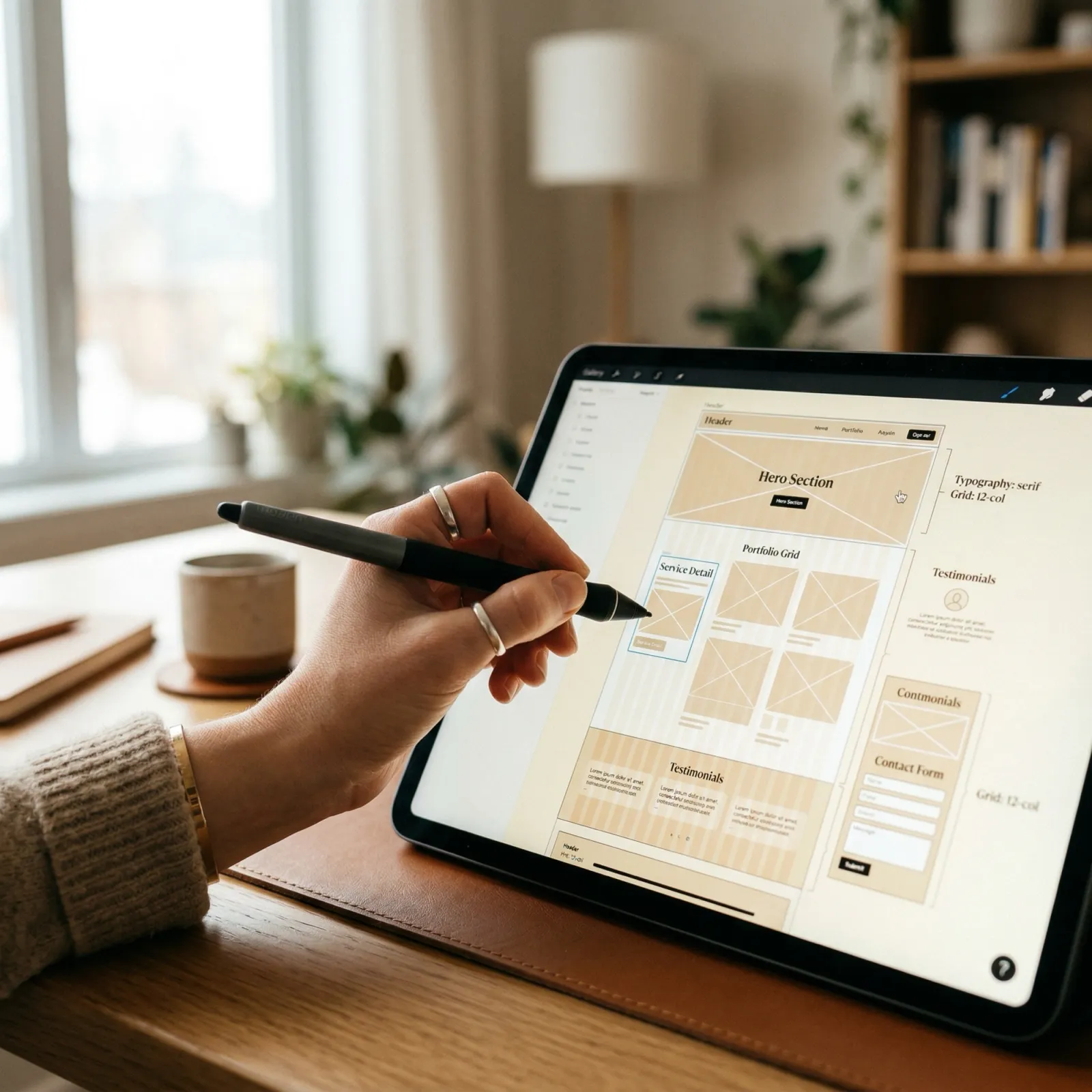
There is no substitute for watching actual users interact with your product. Our usability testing sessions reveal the gaps between how you think your product works and how users actually experience it. We observe navigation confusion, unclear calls-to-action, unexpected behaviors, and moments of delight—providing unfiltered insight into the real user experience.
Task-Based Testing That Mirrors Real Goals
We design testing scenarios that reflect what users actually want to accomplish with your product. Rather than arbitrary tasks, we create realistic scenarios based on your conversion goals, user journeys, and key workflows. This ensures findings translate directly into improvements that impact business metrics and user satisfaction.

Recruit the Right Participants Who Match Your Users
Testing with the wrong people produces misleading results. We carefully recruit participants who match your target user personas in demographics, behavior, technical proficiency, and use case. Proper screening ensures feedback comes from people who represent your actual audience—not random internet users or internal stakeholders with product knowledge.
Data-Driven Findings with Clear Priorities
We transform observations into actionable insights backed by both qualitative feedback and quantitative metrics. Every finding is categorized by severity, frequency, and business impact. You receive a prioritized roadmap showing which fixes provide the biggest improvements with the least effort—no guesswork about what to tackle first.
Testing Methods
Multiple methodologies to uncover different types of insights
Moderated Testing
One-on-one sessions with real-time observation, think-aloud protocol, and follow-up questions to understand the "why" behind behaviors.
Unmoderated Remote Testing
Participants complete tasks independently on their own devices while we record sessions for later analysis—faster and more natural.
First-Click Testing
Measure where users first click when trying to complete tasks, revealing navigation intuition and information architecture issues.
A/B Testing
Compare two design variations to determine which performs better on specific metrics and user preferences.
Five-Second Tests
Test first impressions by showing designs for 5 seconds and asking about recall, purpose, and initial reactions.
Tree Testing
Validate information architecture and navigation structure by testing findability without visual design interference.
Trusted by Data-Driven Product Teams


Real Testing Results, Real Business Impact
See how usability testing uncovered critical issues and drove measurable improvements
SaaS Onboarding Flow Optimization
CloudSync Analytics
Usability testing revealed that 68% of new users abandoned onboarding at the integration step. Users were confused by technical jargon and unclear value proposition. We tested simplified flows and clearer messaging.
Technologies
Our Usability Testing Process
A structured approach that delivers actionable insights and clear recommendations
Test Planning & Objectives
Define what we need to learn, which features or flows to test, success metrics, and target user segments. Create realistic task scenarios that align with business goals and user motivations.
Deliverables
Participant Recruitment & Screening
Recruit participants who match your target personas through specialized platforms, user panels, or customer outreach. Screen candidates to ensure they represent real users and schedule sessions.
Deliverables
Testing Sessions & Moderation
Conduct one-on-one moderated sessions or launch unmoderated remote tests. Observe users completing tasks, ask follow-up questions, and record sessions for analysis while taking detailed notes.
Deliverables
Analysis & Pattern Identification
Review all sessions to identify recurring patterns, calculate task success rates, categorize issues by severity, and connect findings to business impact. Tag video clips for highlight reels.
Deliverables
Reporting & Recommendations
Create comprehensive report with identified issues, supporting evidence, task metrics, and prioritized recommendations. Include annotated screenshots and video clips showing critical moments.
Deliverables
Implementation Support & Retesting
Present findings to stakeholders, answer questions, and provide guidance during implementation. Optional: conduct follow-up testing to validate that fixes resolved identified issues.
Deliverables
Comprehensive Testing Deliverables
Everything you need to understand issues and prioritize improvements
Session Recordings
Complete recordings of all testing sessions with screen capture, audio commentary, and participant reactions for detailed review and stakeholder sharing.
Comprehensive Usability Report
Detailed report documenting all identified issues with descriptions, severity ratings, frequency, supporting evidence, and user quotes.
Task Success Metrics
Quantitative data showing task completion rates, time-on-task, error counts, and navigation paths for each scenario tested.
Prioritized Issue List
Issues categorized by severity (critical, major, minor) and prioritized by impact and implementation effort to guide decision-making.
Annotated Screenshots & Videos
Visual documentation with annotations highlighting specific issues, user confusion points, and successful interactions for clarity.
Actionable Recommendations
Specific, detailed recommendations for fixing each identified issue—not just problem identification but clear solutions.
Impact Analysis
Analysis connecting UX issues to business metrics like conversion rates, completion rates, support costs, and user satisfaction.
Highlight Reel
Curated video compilation of key user struggles, confusion moments, and insights for stakeholder presentations and buy-in.
Implementation Roadmap
Phased improvement plan separating quick wins from strategic changes, with estimated impact and effort for each recommendation.
Before & After Improvements
Usability testing identifies issues—our recommendations fix them
Issue Found
Users abandoned checkout because shipping costs appeared too late
Recommendation
Display shipping estimates on cart page before checkout
Issue Found
New users could not find key features buried in nested navigation
Recommendation
Restructured IA and added guided onboarding tour
Issue Found
Mobile users struggled with tiny tap targets and confusing forms
Recommendation
Increased button sizes, simplified forms, added auto-fill
Issue Found
Users did not understand technical jargon in product descriptions
Recommendation
Rewrote copy in plain language with benefit-focused messaging
Related UI/UX Design Services
Transform testing insights into action with our comprehensive design services
Conversion-Driven Design
Data-informed UX/UI design that maximizes signups, demos, purchases, and engagement through testing and optimization.
Product Design
End-to-end digital product design from discovery to delivery. Create intuitive, high-performing products users love.
Mobile App UI/UX
Platform-native mobile design for iOS and Android. Thumb-friendly interfaces that feel native and intuitive.
Branding & Identity
Digital-first brand strategy and visual identity that builds recognition, trust, and emotional connection with your audience.
Website Design & Development
Custom website design and development with modern frameworks. Beautiful, fast, conversion-optimized websites.
What Product Teams Say
Real feedback from teams who transformed their UX through testing
“The usability testing completely changed our product roadmap. Watching real users struggle with features we thought were intuitive was eye-opening. The prioritized recommendations gave us a clear action plan.”
Rachel Martinez
Head of Product at CloudSync Analytics

“We increased mobile conversion by 89% by fixing the issues uncovered in testing. The video highlights were crucial for getting executive buy-in. Worth every penny.”
David Chen
Director of E-commerce at Modern Home Goods

“Verlua recruited perfect participants for our B2B software and uncovered navigation issues that were killing productivity. The before-and-after metrics proved the value of their recommendations.”
Jennifer Adams
VP of User Experience at TechFlow Enterprise

Frequently Asked Questions
Everything you need to know about usability testing services
What is usability testing and why do I need it?
Usability testing involves observing real users as they interact with your product, website, or app to identify pain points, confusion, and barriers to completion. You need it because internal teams are too close to the product to see issues objectively. Testing with actual users reveals friction points you never knew existed, validates design decisions, and provides clear direction for improvements that increase satisfaction and conversions.
How many users do you need for usability testing?
Research by Jakob Nielsen shows that testing with just 5 users uncovers approximately 85% of usability issues. We typically recommend 5-8 participants per user segment or persona for moderated testing. For quantitative studies or when testing multiple distinct user groups, we may increase this to 8-12 per segment. The key is quality participants who match your target audience, not massive sample sizes.
What methods do you use for usability testing?
We use multiple testing methods based on your goals and timeline. Moderated testing involves one-on-one sessions where we guide participants through tasks while observing and asking questions. Unmoderated remote testing lets users complete tasks on their own time while we record sessions. We also conduct A/B testing, first-click tests, five-second tests for first impressions, and tree testing for navigation. Each method provides different insights into user behavior and preferences.
How do you recruit participants for usability tests?
We recruit participants through multiple channels depending on your target audience. For consumer products, we use participant recruitment platforms, social media, and user panels. For B2B products or specialized audiences, we tap into professional networks, industry associations, and your existing customer base. We carefully screen all participants to ensure they match your target user personas and have no conflicts of interest that could bias results.
What happens during a usability testing session?
During moderated sessions, participants complete realistic tasks while thinking aloud, explaining their thought process, expectations, and reactions. We observe where they struggle, what confuses them, and what delights them. Sessions typically last 45-60 minutes and are recorded (with permission) for analysis. We ask follow-up questions to understand the "why" behind behaviors. For unmoderated tests, users complete tasks independently while their screen, clicks, and sometimes face are recorded for later review.
How long does usability testing take?
A complete usability testing project typically takes 2-4 weeks. This includes 3-5 days for test planning and recruitment, 5-7 days for conducting sessions (usually 5-8 sessions over several days), and 5-7 days for analysis and reporting. Rush projects can be completed in 1-2 weeks for urgent needs. Unmoderated remote testing can provide initial insights in as little as 3-5 days since sessions happen simultaneously rather than sequentially.
What will I receive as deliverables?
You receive comprehensive findings including session recordings, detailed usability report with identified issues categorized by severity, annotated screenshots and videos highlighting key moments, task success rates and completion times, prioritized recommendations with specific fixes, and before-and-after improvement opportunities. For stakeholder buy-in, we also provide highlight reels showing the most impactful user struggles. All findings are actionable and prioritized based on impact and implementation effort.
Can you test prototypes or does it need to be live?
We can test at any stage of development. Early-stage testing with wireframes or low-fidelity prototypes validates concepts and flows before significant development investment. Interactive prototypes (Figma, Adobe XD) work great for testing navigation and task flows. Staging sites allow realistic testing before launch. Live products can be tested for optimization and iteration. Testing early and often prevents expensive fixes later and ensures you build the right thing from the start.
How much does usability testing cost?
Usability testing investment varies based on scope, methodology, and participant requirements. A basic unmoderated remote test with 5-8 users typically starts around $3,000-$5,000. Moderated testing sessions with recruited participants range from $6,000-$12,000 for consumer audiences and $10,000-$20,000+ for specialized B2B or niche audiences. Complex multi-phase studies with multiple user segments and methods range from $15,000-$35,000+. We provide detailed quotes after understanding your specific needs and goals.
What if the testing reveals major problems?
Finding major problems is actually a success—you discovered critical issues before they cost you conversions, revenue, or user trust. Our reports prioritize issues by severity and implementation effort, creating a clear roadmap for improvements. We separate quick wins (high impact, low effort) from strategic redesigns. Many clients start with quick fixes that provide immediate improvements, then tackle larger redesigns in phases. We can also provide design support to implement recommended fixes, ensuring solutions actually address the identified problems.
Ready to Discover What is Really Blocking Your Users?
Stop guessing and start knowing. Our usability testing reveals the friction points holding back your conversions, satisfaction, and growth.