Web Design in San Francisco, CA
Beautiful, conversion-focused websites that drive real business results
Helping Technology, Finance, Tourism and other businesses across the San Francisco Bay Area grow online.
Your website is often the first impression potential customers have of your business. Our web design services combine stunning aesthetics with strategic user experience design to create websites that not only look impressive but actively convert visitors into customers. We specialize in creating custom designs that reflect your unique brand identity while implementing proven conversion optimization techniques.
Web Design in San Francisco, CA
Web design in San Francisco is judged on a phone in a SoMa cafe within four seconds, and the buyer making the judgment has shipped consumer software for a living.
A site that loads slowly, layouts awkwardly on a 6.1-inch screen, or carries the visual fingerprints of a ten-year-old WordPress template reads as a credibility problem to the founders, partners, and investors who fill the high-rises around Salesforce Tower, the Transamerica Pyramid, and the Mission Bay biotech corridor.
Tech and AI companies in SoMa and the Mission expect editorial design that holds its own next to Stripe, Linear, Notion, OpenAI, and Anthropic, because their own users grade their work against those products every day.
Biotech and life-sciences firms around UCSF Mission Bay and the Dogpatch labs need sites that read as scientifically credible — peer-grade language, FDA-aware claim discipline, recruiting and investor pages that operate as a separate product surface from the patient-facing tools.
Web Design for San Francisco's Top Industries
How we apply web design to the verticals driving San Francisco's economy.
Technology
A SoMa or Mission startup site has to look like the founders would ship it themselves. The visual baseline is set by Stripe, Linear, Vercel, Notion, OpenAI, and Anthropic, and the buyer comparing your site has at least three of those tabs open. That means typography choices that read on a 27-inch monitor and a 6.1-inch screen, animation that respects reduced-motion preferences, performance budgets enforced through Lighthouse and real-user metrics, and copy that does not waste a word. CCPA and CPRA disclosures, working Do Not Sell or Share opt-out flows, and accessibility documentation are baseline rather than upgrades because enterprise procurement reviews ask for them. For consumer products, the homepage is a product surface — the same craft applies as the application itself.
See all industries we serveBiotechnology
Mission Bay biotech sites carry an unusual constraint: three audiences read the same page. Scientific peers want abstracts, mechanism-of-action diagrams, and named investigators. Investors want pipeline charts, recent press, and clear regulatory milestones. Recruiting candidates want lab photography, location detail near UCSF, and team pages that show real people. FDA promotional rules constrain claim language, particularly on therapeutic and device pages, and patient-facing tools touching protected health data fall under HIPAA layered with California's CMIA. The design challenge is editorial more than aesthetic — clear hierarchy across investor, scientific, and recruiting paths from a single homepage, with claim discipline that does not read as defensive.
See all industries we serveFinance
FiDi RIAs, wealth-management boutiques, and venture funds work under the SEC Marketing Rule (Rule 206(4)-1) and, for broker-dealers, FINRA Rule 2210. That governs how testimonials, performance figures, and case studies are presented, what disclosures must accompany them, and how recordkeeping is handled. Public-facing pages also fall under California's most active ADA Title III enforcement environment, which has hit Bay Area finance sites repeatedly. The visual baseline is restrained editorial design — generous whitespace, conservative typography, real photography of real partners, named credential signaling, and trust pages (privacy, accessibility, security) that read as serious rather than templated.
See all industries we serveWeb Design Across San Francisco
We work with businesses across San Francisco's commercial districts and surrounding communities.
SoMa (South of Market)
The dense corridor of SaaS and AI firms near the Caltrain station. Sites here are graded against Stripe, Linear, and OpenAI within seconds — performance and editorial design carry every interaction.
Financial District (FiDi)
Banks, RIAs, law firms, and accountants expect editorial restraint, named credential signaling, and accessibility documentation prominent in the footer. SEC and FINRA rules govern testimonial framing.
Mission Bay
Biotech and life-sciences firms around UCSF need sites that read as scientifically credible while serving investors and recruiters. FDA claim discipline applies to every product page.
Mission District
Independent restaurants, bars, and creative studios along Valencia and Mission depend on Maps panel visibility and same-day mobile intent. Storefront pages that surface hours and reservations win calls.
Hayes Valley
Boutique fashion, beauty, and lifestyle brands need photography-forward design that converts on mobile. Booking flows for studios and restaurants compete with the visual baseline of design-led DTC.
Marina
Affluent residential customers researching boutique fitness, medspas, dental, and chef-driven restaurants. Buyers research thoroughly before booking, so site depth and trust signals matter more than reach.
Union Square
Tourism intent runs heavy and same-day mobile dominates. Hotels, retail, and theaters live or die on Maps optimization, fast mobile load, and accessible booking flows.
Sunset and Richmond
Outer-west neighborhood-scale practices — dental, medical, legal, restaurants — serving residents along Irving, Clement, Geary, and Noriega. Hyper-local family-oriented intent dominates.
Why San Francisco's Market Looks the Way It Does
San Francisco proper holds roughly 875,000 residents inside 47 square miles, making it one of the densest large cities in the United States.
Most San Francisco consumer queries assume walking distance. Storefront sites compete primarily on Maps panel visibility, profile completeness, and mobile speed — not on chasing additional organic positions for broad city-level keywords.
The San Francisco Bay Area metro region exceeds 7 million residents across nine counties and produces hundreds of billions of dollars in annual economic output.
B2B sites here serve a regional buying market, not just a city. Service-area architecture that names the Peninsula, the East Bay, and the South Bay captures search volume that SF-only sites miss while keeping the canonical San Francisco address.
Mission Bay's biotech corridor hosts hundreds of life-sciences companies and labs anchored by UCSF Mission Bay, and San Francisco draws tens of millions of visitors per year across Union Square, the Embarcadero, and Fisherman's Wharf.
Two distinct buyer profiles dominate San Francisco web design. Biotech sites need scientific and regulatory discipline; tourism and hospitality sites need same-day mobile conversion. A generic 'San Francisco template' fits neither.
San Francisco Web Design FAQs
Questions we hear most often from San Francisco businesses about web design.
Will my SF startup site need to look as polished as Stripe's or Linear's to be taken seriously?
+
How aggressive is California ADA enforcement against San Francisco websites in practice?
+
What does a San Francisco web design project cost compared to elsewhere in California?
+
How long does an SF web design project typically take from kickoff to launch?
+
Does CCPA and CPRA actually change how an SF site has to be built, or is a privacy notice enough?
+
How important is Maps panel visibility for an SF storefront business compared to organic ranking?
+
What does an FDA-aware Mission Bay biotech site actually look like in practice?
+
Can a San Francisco site serve tourist and resident audiences without becoming two sites?
+
Why hire Verlua for web design in San Francisco?
Because we pair San Francisco-market context with a delivery process built around outcomes a business owner can measure. Below are the benefits Technology and Finance operators in the San Francisco Bay Area get when web design is handled by Verlua instead of pieced together in-house.
Custom designs tailored to your brand and target audience
Mobile-first responsive layouts for all devices
Conversion rate optimization built into every page
Fast loading times optimized for Core Web Vitals
SEO-friendly architecture for better rankings
Ongoing support, maintenance & updates
ADA accessibility compliance
Analytics and tracking setup included
How does Verlua approach web design in San Francisco?
We scope every San Francisco web design engagement around the owner's revenue model first, then layer in design, build, and SEO decisions on top of that. The points below summarize where our delivery approach differs from a typical web design vendor working with San Francisco businesses.
Local expertise understanding your market and customers
Conversion-focused design backed by data and research
Modern tech stack for speed and security
Ongoing partnership, not just a one-time project
Transparent pricing with no hidden fees
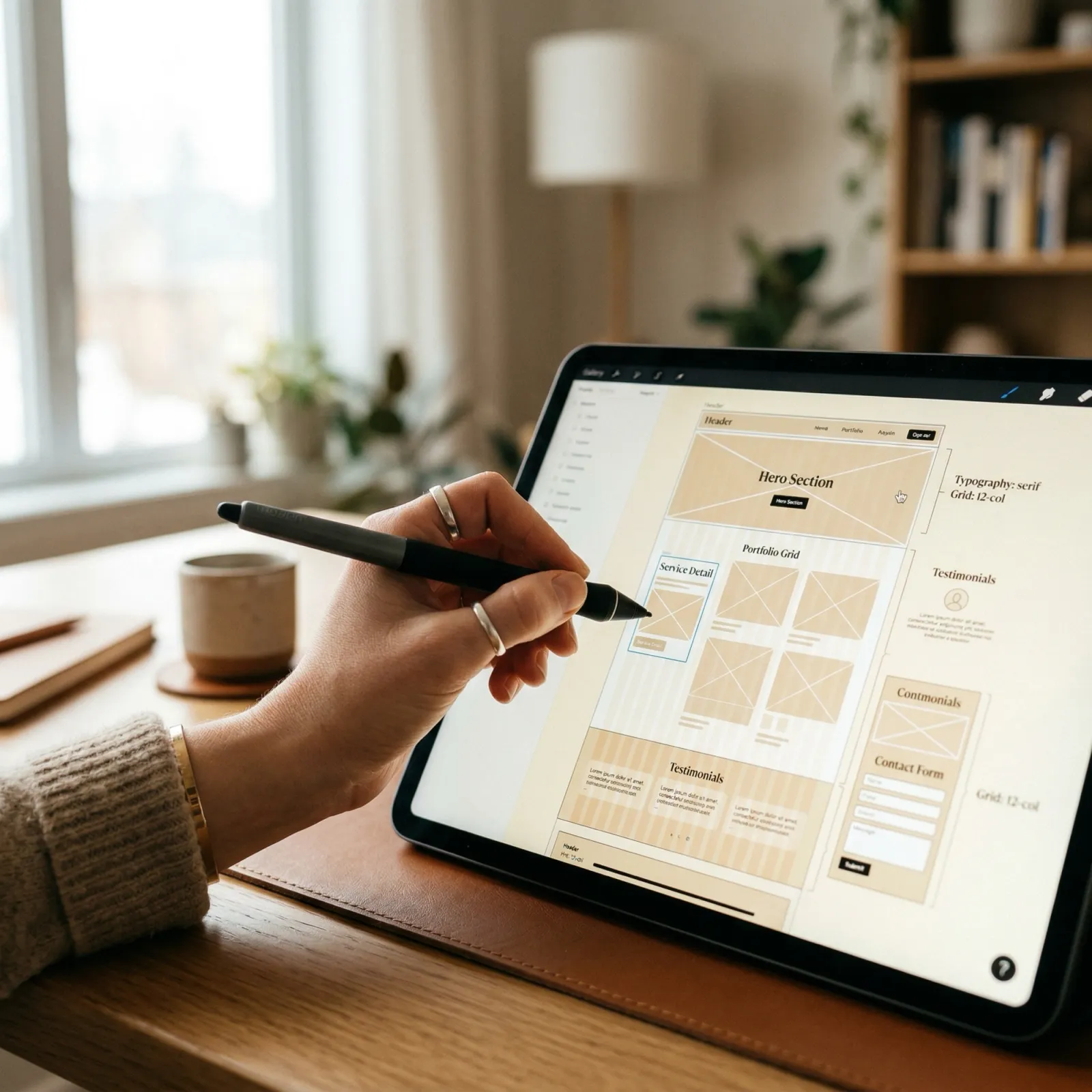
What's included in Verlua's web design engagement in San Francisco?
Every San Francisco web design project from Verlua includes the deliverables below as standard scope. Add-ons (extra integrations, additional locations, ongoing retainers) are quoted separately so San Francisco owners can see exactly what each line item costs.
Custom UI/UX Design
Unique designs crafted specifically for your brand and audience
Responsive Development
Flawless experience on desktop, tablet, and mobile devices
Content Management System
Easy-to-use CMS so you can update content yourself
E-commerce Integration
Online store capabilities with secure checkout
Analytics Setup
Google Analytics 4 and conversion tracking configured
Performance Optimization
Fast load times and excellent Core Web Vitals scores
How does Verlua's web design process work in San Francisco?
A San Francisco web design engagement runs through 6 phases, from discovery to launch and beyond. Each phase ends with a deliverable the owner approves before we move forward, so there are no surprise scope shifts mid-project.
Discovery & Strategy
Week 1We dive deep into your business goals, target audience, and competitors to create a strategic foundation
Wireframing & Planning
Week 2Create detailed wireframes and site architecture to map the user journey
Visual Design
Weeks 2-3Develop stunning visual designs with your brand colors, typography, and imagery
Development
Weeks 3-5Build your website with modern, fast technologies and thorough testing
Content Integration
Week 5Add your content, optimize images, and fine-tune the user experience
Launch & Optimize
Week 6+Deploy your site, set up analytics, and begin continuous improvement
What kind of results has Verlua delivered with web design for San Francisco-area businesses?
Challenge: Outdated website with poor mobile experience and low conversion rates
Solution: Complete redesign with mobile-first approach and strategic CTAs
Results Achieved:
Should a San Francisco business handle web design in-house or hire an agency?
The honest answer depends on staffing and timeline. A San Francisco owner with internal capacity and 6-12 months of runway can DIY this work. Most owners we talk to want it operational in weeks, not quarters — so they hand it off. The grid below compares both paths side by side.
DIY Approach
Generic templates that look like everyone else
Hours spent learning design tools
No conversion optimization strategy
Limited mobile responsiveness
Security vulnerabilities and slow speeds
Professional Verlua
Custom designs unique to your brand
Professional designers handle everything
Data-driven design for maximum conversions
Perfect on every device and screen size
Enterprise-grade security and performance
How much does web design cost in San Francisco?
San Francisco web design pricing from Verlua starts at $2,500 for a starter scope and scales based on the number of pages, integrations, and ongoing support needed. The table below shows what each tier includes, who it fits, and how long delivery typically runs.
| Package | Starts at | Typical timeline | Best fit for San Francisco businesses |
|---|---|---|---|
| Starter | $2,500 | Week 1 | Small businesses getting started online |
| Professional | $5,000 | 4-8 weeks | Growing businesses needing more features |
| Enterprise | $10,000+ | By scope | Established businesses with complex needs |
| Custom | By estimate | By scope | Multi-location, enterprise, or non-standard web design needs in the San Francisco Bay Area |
Starter
Small businesses getting started online
- 5-page responsive website
- Mobile optimization
- Basic SEO setup
- Contact form
- 30 days support
Professional
Growing businesses needing more features
- 10-15 page website
- Custom design
- CMS integration
- Blog setup
- Analytics tracking
- 90 days support
Enterprise
Established businesses with complex needs
- Unlimited pages
- E-commerce integration
- Custom functionality
- Advanced SEO
- Priority support
- Ongoing maintenance
Need a custom solution? Contact us for a personalized quote.
Which San Francisco industries does Verlua serve for web design?
Verlua works across 7 core verticals in San Francisco, including Technology, Finance, Tourism. Each card below lists the specific web design priorities we tend to see for that industry in the San Francisco Bay Area.
Technology
- Modern SaaS-style interfaces
- Interactive product demos
- Developer documentation portals
Finance
- Secure client portals
- Trust-building professional design
- Regulatory compliance displays
Tourism
- Booking engine integration
- Multi-language support
- Visual destination showcases
Healthcare
- HIPAA-compliant patient portals
- Online appointment scheduling integration
- Accessibility-first design for all patients
Biotechnology
- Research showcase platforms
- Investor relations portals
- Clinical trial information systems
Professional Services
- Lead generation focused layouts
- Portfolio and case study displays
- Client testimonial integration
Startups
- Conversion-optimized layouts
- Mobile-responsive design
- Brand identity integration
Frequently asked questions about web design in San Francisco
Quick answers to the questions San Francisco business owners ask most before starting a web design engagement with Verlua.
How much does web design cost in San Francisco?
Web Design costs vary based on project scope and complexity. Our packages start at $2,500 for basic projects. We offer competitive pricing for San Francisco businesses with transparent quotes and no hidden fees. Contact us for a custom quote tailored to your specific needs.
How long does a web design project take in San Francisco?
Most web design projects take 4-8 weeks from start to finish, depending on complexity. Our process includes discovery, design/development, testing, and launch phases. We provide detailed timelines during our initial consultation and keep you updated throughout the project.
Why choose Verlua for web design in San Francisco?
We combine local market expertise with modern technology and proven processes. Our team understands San Francisco's business landscape, including key industries like Technology, Finance, Tourism. We focus on results - not just deliverables - and maintain ongoing partnerships with our clients.
Do you offer ongoing support after the web design project is complete?
Yes! We offer ongoing support, maintenance, and optimization packages to ensure your web design solution continues to perform at its best. All projects include initial support, and we offer monthly retainer options for continuous improvement.
Can you help with web design for Technology businesses in San Francisco?
Yes — We have extensive experience working with Technology businesses in San Francisco and the San Francisco Bay Area. Our web design solutions are customized to your industry's specific needs, compliance requirements, and customer expectations.
What makes professional web design better than DIY solutions?
Professional web design provides custom solutions tailored to your business, expertise that avoids costly mistakes, and ongoing support. While DIY tools seem cheaper initially, they often result in missed opportunities, wasted time, and inferior results. Our clients typically see < 2s target page load time.
Where can a San Francisco owner learn more about web design?
Three deeper reads from the Verlua blog that walk through the same web design concepts at the level a San Francisco business owner needs before kicking off a project.
Other Services in San Francisco
Web Design in Nearby Cities
Where in the San Francisco Bay Area does Verlua deliver web design?
Verlua works with businesses in San Francisco proper and the surrounding 5 communities listed below. Web Design engagements run remotely, so geography inside the San Francisco Bay Area does not change scope or price.
San Francisco
Oakland
Berkeley
Daly City
San Mateo
Palo Alto
Serving ZIP codes: 94102, 94103, 94104, 94105, 94107, 94108, 94109, 94110 and surrounding areas
How do I get a web design quote from Verlua for my San Francisco business?
Send the project details over and we'll come back with scope, timeline, and a fixed quote — usually within one business day. No obligation, no sales pressure, just a written plan for your San Francisco business.
Call Us
+1 (916) 740-7266Email Us
support@verlua.com