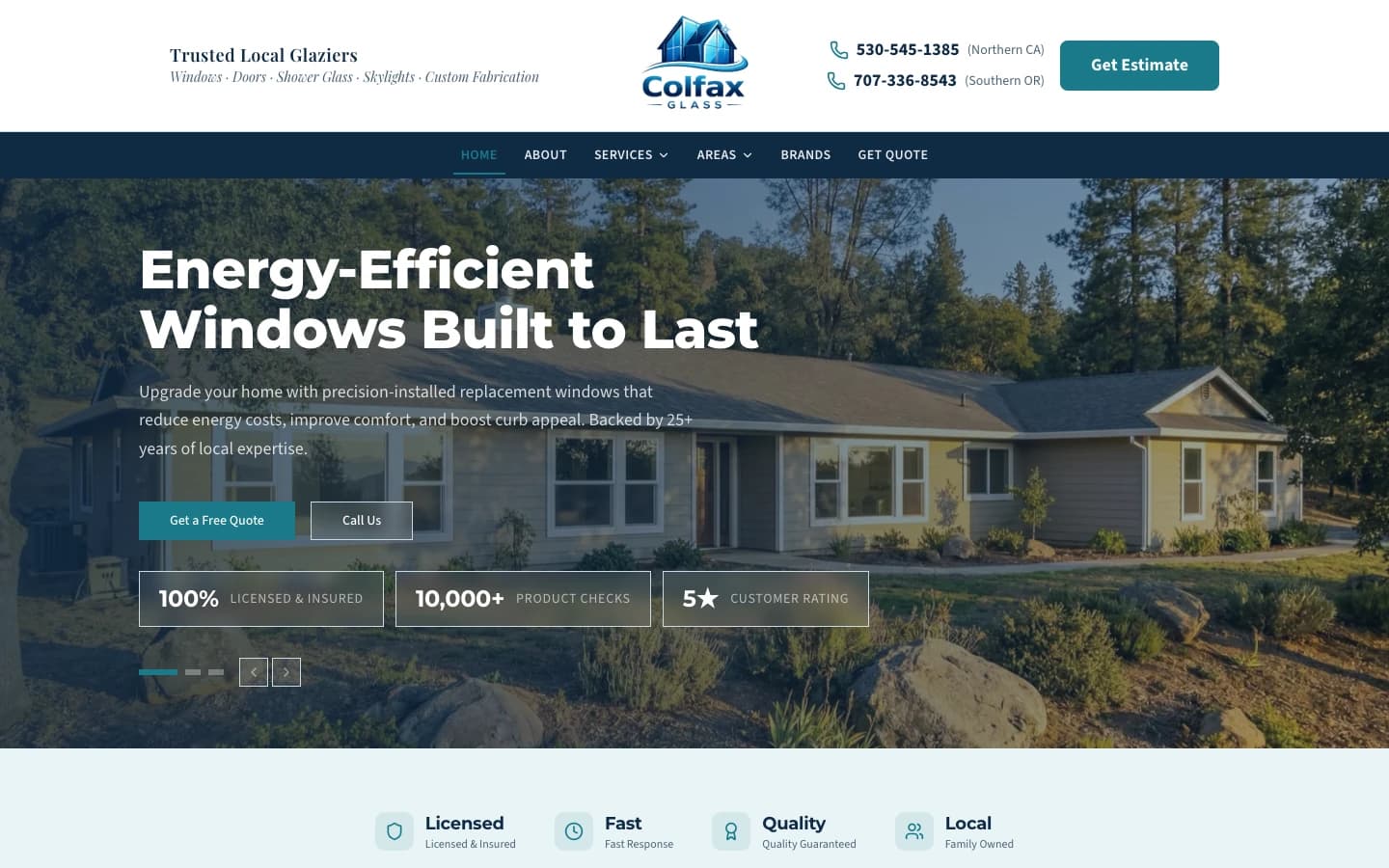
Colfax Glass
Window Installation & Glass Services
+408% Google search clicks · 90-day comparison through Sep 15, 2026
SEO for pest control companies
Homeowners search the bug before they search the company. We build the pages that answer “what is this and is it a problem?”, then turn that visit into an inspection or a service plan.
$2,500/moLaunch months
$1,500/moOngoing SEO
Pest control SEO is the work of getting a pest control company found on Google when people nearby search for a pest problem or a pest control service, then turning that visit into an inspection, a treatment or a recurring plan. It happens in three places: your Google Business Profile in the map pack, the pest and town pages on your website, and the reviews people read before they call.
Verlua does SEO for pest control companies that want more jobs from their own listing and website and fewer from paid leads. We plan pages around the pests you treat and the towns on your routes, and report monthly on calls, leads and search clicks. We have not run SEO for a pest control company yet; the proof on this page comes from other home-service sites we build and run.
A pest problem usually starts with a question, not a company name: “tiny black ants in kitchen”, “flying bugs that look like termites”, “scratching in the attic at night”, “wasps going into a hole in the wall”. The person wants to know what it is, whether it’s dangerous and whether they can handle it themselves.
A page that answers that question honestly, then explains when a professional is the better call, reaches the customer at the start of the decision instead of the end. The UC Statewide IPM Program notes that winged ants are often mistaken for winged termites. A clear “ant or termite?” page with photos is exactly what that confused homeowner is looking for, and it ends with an inspection request.
We build one page per pest you actually treat, covering identification, signs, risks, what treatment involves and what affects the price.
A side-by-side guide with photos and one clear next step: book an inspection if it might be termites.
Whether it’s safe to handle themselves, what removal involves, and a same-day request button.
Report turnaround, what the inspection covers and a way to order it without phone tag.
A map pack listing with a clear service area, recent reviews and a quick way to book.
Whether it’s likely rodents or another animal, what exclusion work involves and an inspection request.
Pest control is a route business. A new customer on a street your technician already drives is cheaper to serve than one far off the route, so town pages belong where your routes are dense or where you want them next, not in every town in the state.
Google is direct about the opposite approach. Its spam policies list pages targeted at specific regions or cities that funnel users to one page as an example of doorway abuse. A town page has to earn its place with real detail: the pests you see most there, the kind of housing you service, how scheduling works in that area, and reviews from customers nearby.
Pest searches follow weather, and the pattern depends on where you work. In California, the UC IPM Program notes that subterranean termite swarms can appear on warm, sunny days after fall or spring rains, and that ants come indoors for food, water, warmth and shelter, or to escape hot, dry weather or flooding.
Those patterns set the publishing schedule. Termite and “flying ants” pages need to be live and indexed before swarm season, ant pages before the first heat or heavy rain, and rodent pages before the season people start hearing noises in the attic. We build the calendar from extension-service guidance for your region plus your own call history, then update pages a season ahead.
In California, the Structural Pest Control Board notes that most lenders require a wood-destroying pests and organisms (WDO) inspection before financing a home loan, and the board offers a public search, by property address, for WDO inspections completed in the last two years. That keeps real estate agents, escrow officers and buyers looking for termite inspections all year, not only in swarm season.
That audience searches differently: “termite inspection for escrow”, “WDO report”, “section 1 termite repairs”. A page built for them explains report turnaround, how your report separates active infestation from conditions likely to lead to one, and how to order an inspection. Outside California, the same page is built around your state’s inspection report and lending requirements.
Searchers usually arrive with one problem, and a recurring plan is usually the offer you want them to leave with. The site has to bridge the two: treat the problem they came for, then explain what a plan covers, how often you visit, what happens if pests come back between visits and how to cancel.
Trust details sit right next to that offer. California licenses structural pest control by branch: Branch 1 for fumigation, Branch 2 for general pests and Branch 3 for termites and other wood-destroying organisms. Listing your company registration and the branches you hold, with a link to the state’s license search, answers the question careful buyers ask before agreeing to regular visits.
The work behind every engagement: the listing first, then the pages, then the reviews and links that build on both.
The right primary category, every pest service listed, a service area that matches your routes, real photos of your technicians and trucks, and hours that match your phones.
One page per pest you treat, from ants, spiders and rodents to termites, bed bugs, wasps and cockroaches, covering what it is, the signs, the risk and what treatment involves.
Pages for the towns where your technicians already run routes, each with local pest and housing detail and links to the pest pages and plans.
Termite, ant, stinging-insect and rodent pages updated a season before demand, based on your region’s patterns and your call history.
A page for agents, escrow officers and buyers: how to order, report turnaround and how findings and repairs are handled.
What a plan includes, visit frequency, re-service policy and cancellation terms, so a one-time caller can see the recurring option.
A review request after every service visit within Google’s rules, plus a monthly report on calls, leads, clicks and rankings by pest and town.
We have not done SEO for a pest control company. The closest proof is local home-service work: Colfax Glass, a window contractor whose service, city and guide pages we built and whose SEO we run, plus grading and gutter contractors with the same service-area setup a pest company needs. Gutter cleaning is seasonal, repeat work, the nearest thing to a pest route in our portfolio. Search Console screenshots are unedited and show clicks, not booked jobs.
Window Installation & Glass Services
+408% Google search clicks · 90-day comparison through Sep 15, 2026
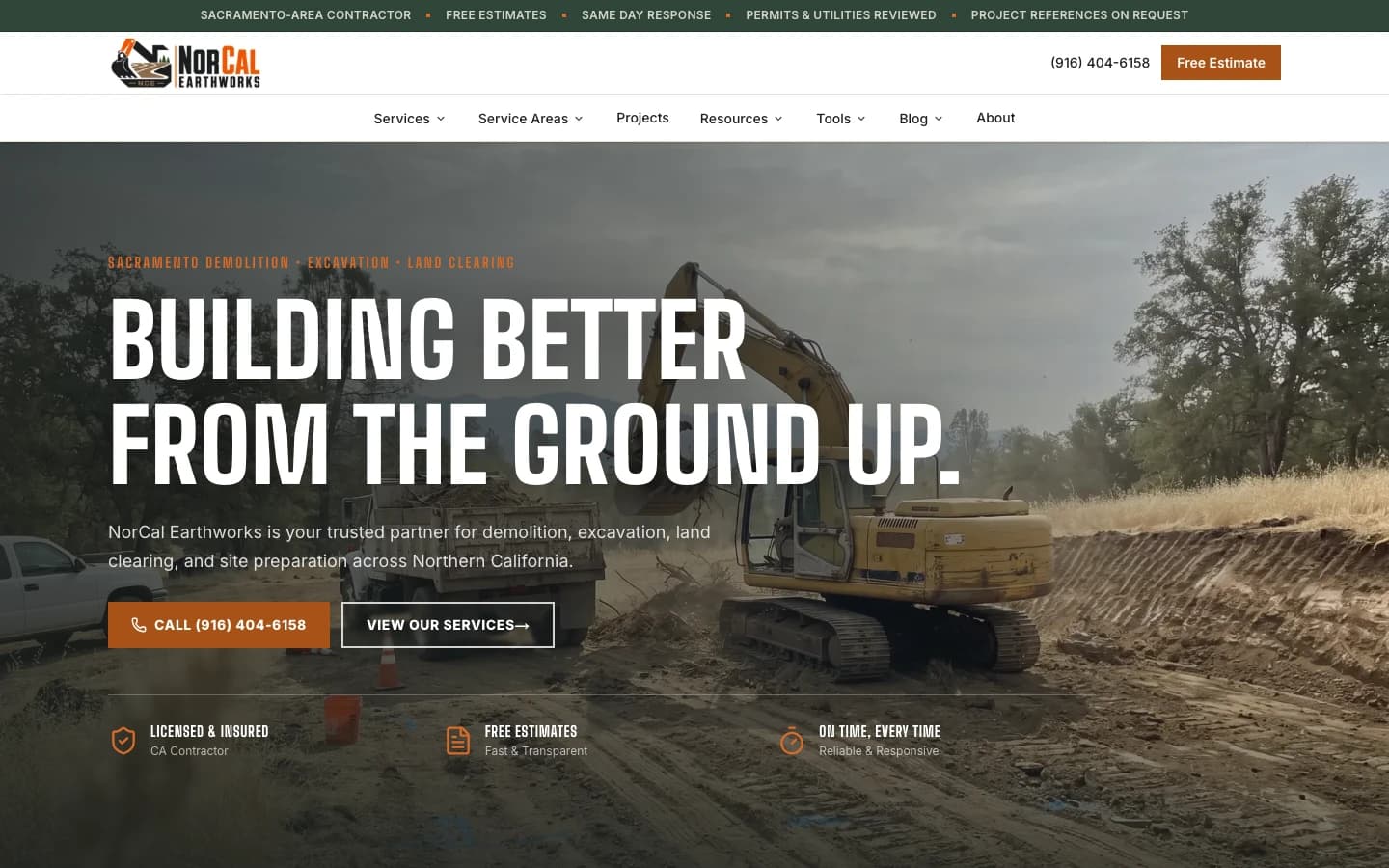
Sacramento Demolition & Land Clearing Contractor
Google search clicks: 25 to 324 · 90-day comparison through Sep 15, 2026

Treasure Valley Gutter Contractor
Ranks for gutter services across Boise and the Treasure Valley
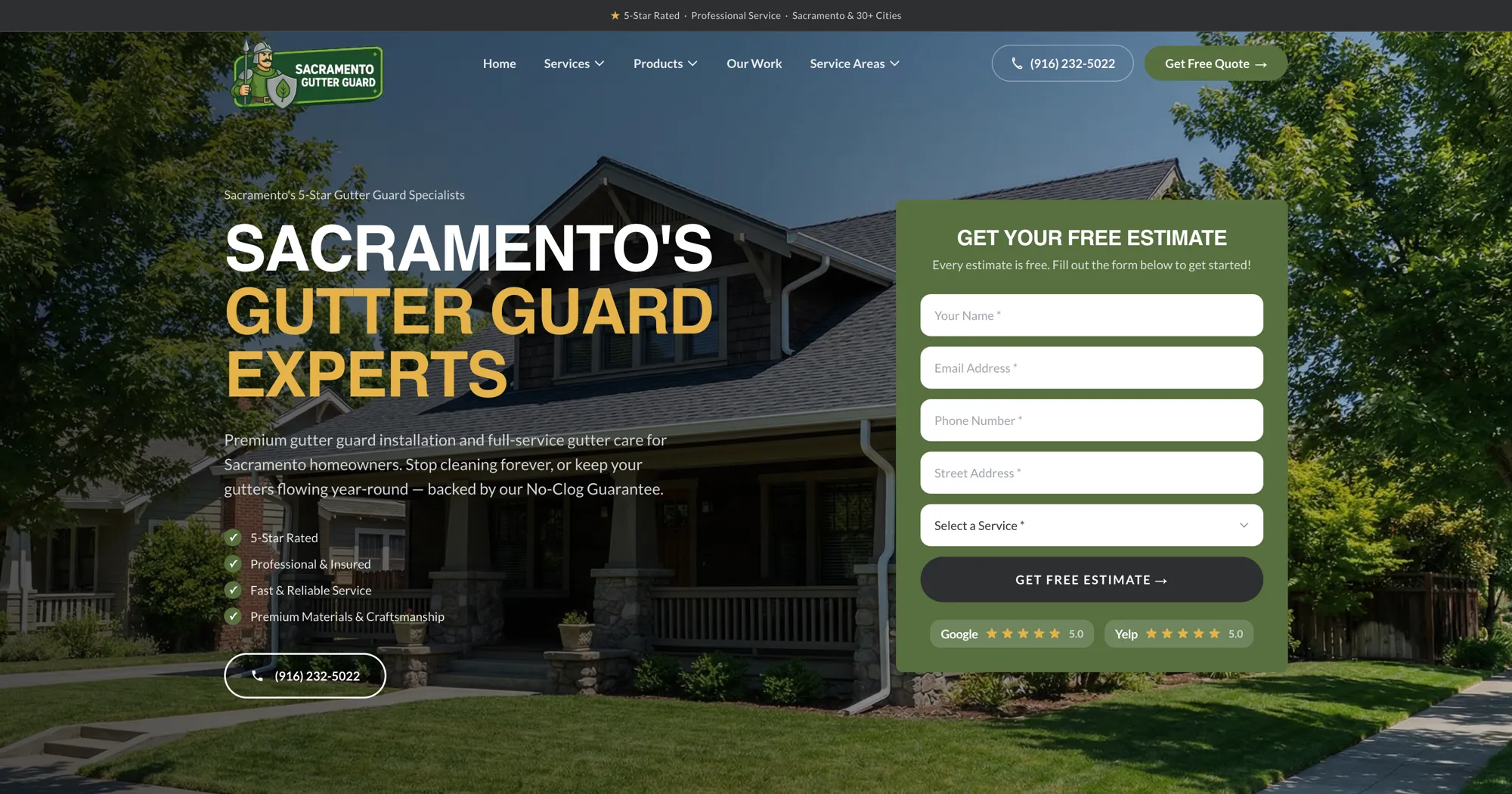
Sacramento Gutter Services
Multi-city service area pages
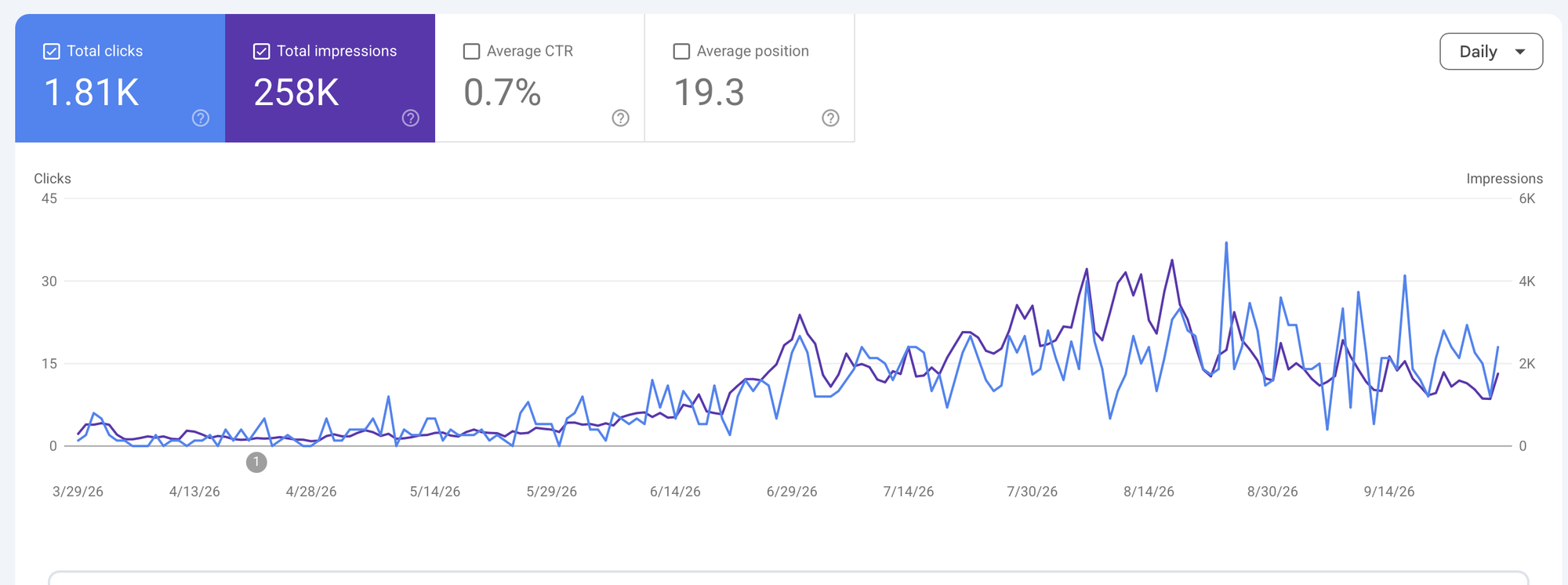
Six months of daily Google search data for four sites Verlua built: a glass contractor, a barbershop, an online store and a marketplace. These are the screenshots, not charts we drew.
 (opens the full-size screenshot)
Window and glass contractor, Placer County
45 → 450Google clicks: first 4 weeks vs. last 4 weeks of the chart
1,811 clicks · 257,832 impressions · Mar 29 – Sep 28, 2026
Read the Colfax Glass case study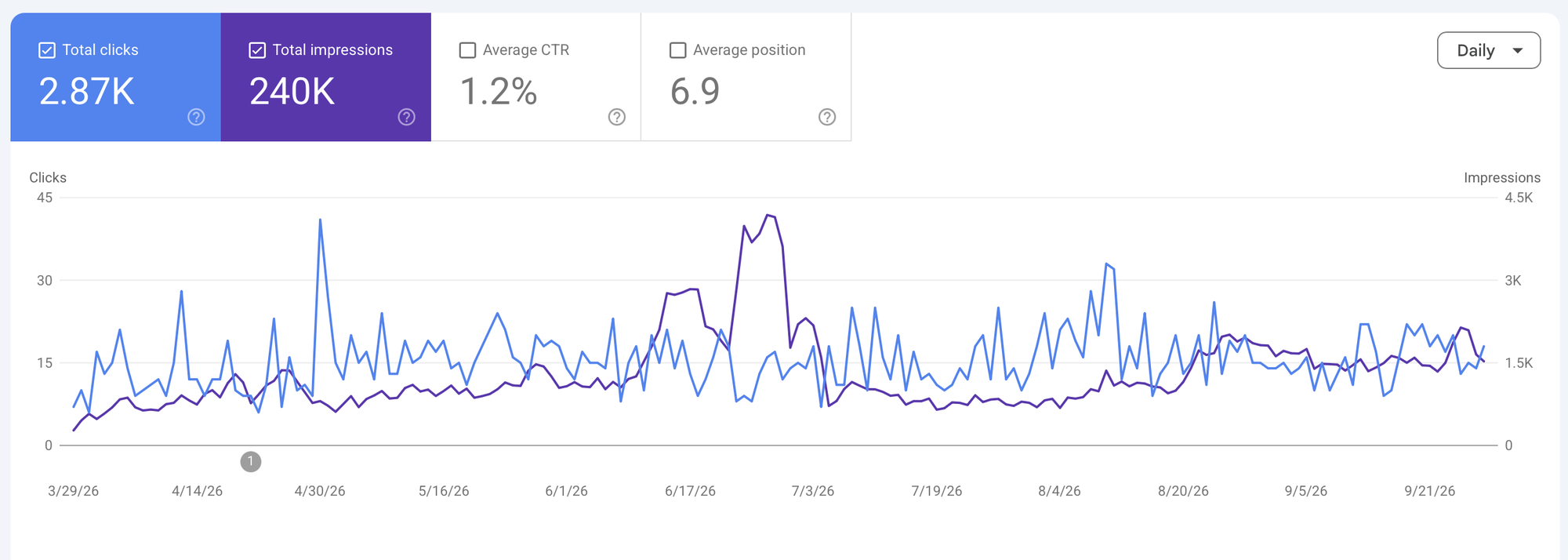 (opens the full-size screenshot)
Sacramento barbershop, three locations
~15 a dayGoogle clicks, steady for six months
2,868 clicks · 240,375 impressions · Mar 29 – Sep 28, 2026
 (opens the full-size screenshot)
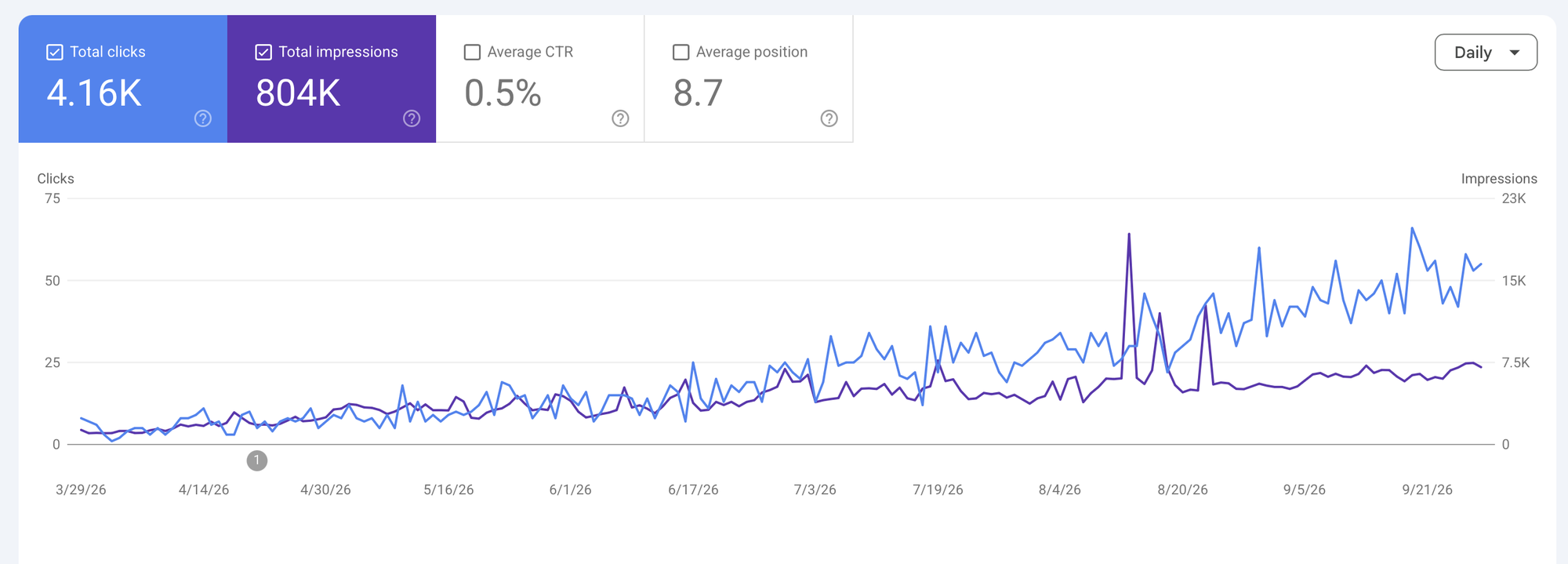
Raw honey producer and online store, Northern California
162 → 1,328Google clicks: first 4 weeks vs. last 4 weeks of the chart
4,160 clicks · 803,922 impressions · Mar 29 – Sep 28, 2026
Read the NorCal Nectar case study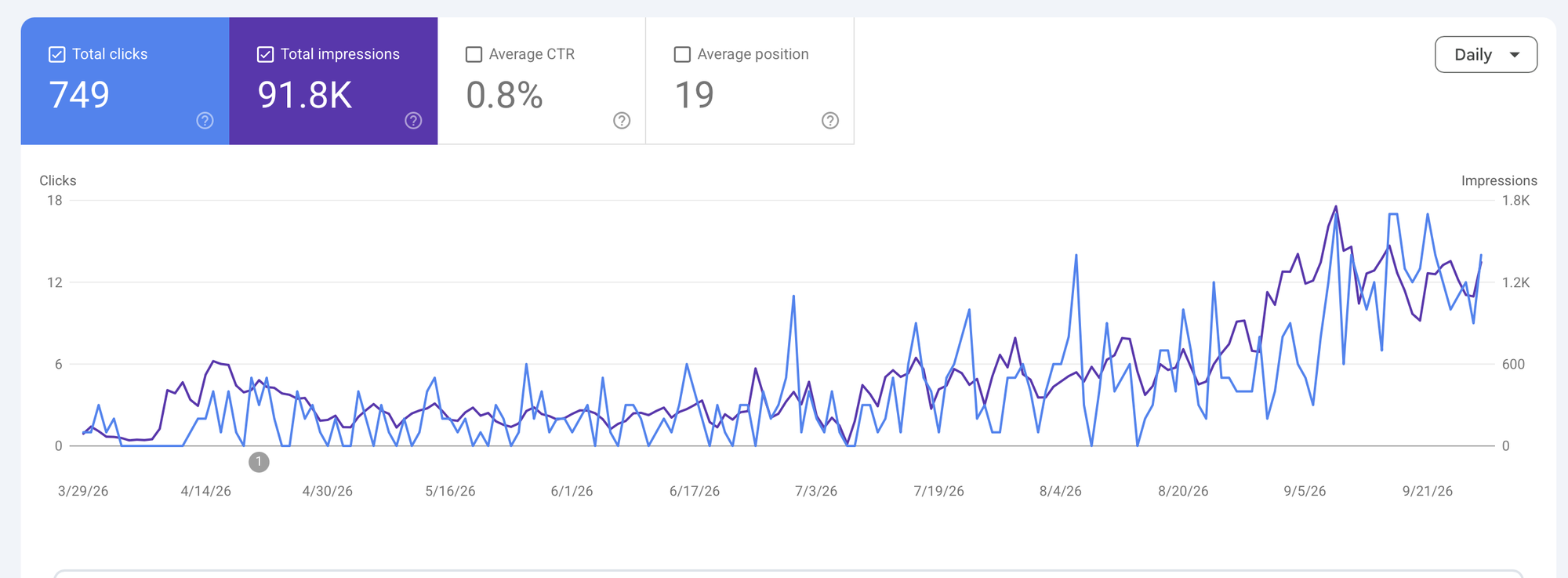 (opens the full-size screenshot)
Heavy equipment marketplace
38 → 304Google clicks: first 4 weeks vs. last 4 weeks of the chart
749 clicks · 91,820 impressions · Mar 29 – Sep 28, 2026
Blue line: clicks, people who came to the site from GooglePurple line: impressions, times the site showed up in results
Screenshots from Google Search Console (Performance report, web search), captured September 30, 2026. Search traffic only, not lead or sales counts. Select any chart to open it full size.
A common redesign + SEO structure is $2,500/mo for the first 2 months (site work included with SEO), then $1,500/mo for the following months of SEO.
Prefer a one-time project invoice instead of monthly billing? We also take project-based website and redesign builds—scoped and quoted after discovery based on pages, integrations, and timeline.
Typical Pest Control SEO engagement
Months 1–2
$2,500/mo
Launch: site fixes or rebuild, Business Profile cleanup, core service pages
Month 3 on
$1,500/mo
Ongoing: city pages, reviews, local links, monthly report
One-time website builds: $2,500 – $5,000. Pest Control website design
Exact pricing depends on scope, competition, and timeline. These figures reflect what we typically quote for local service businesses; every engagement is confirmed after a free audit or discovery call.
Pest control SEO is the work of getting a pest control company to show up on Google when nearby homeowners and property managers search for a pest problem or a pest service. It covers the Google Business Profile and map pack, pest and town pages on the website, reviews, and tracking that ties calls back to the searches that produced them.
Not a news-style blog. What earns search traffic for pest companies is evergreen pest pages: identification, signs, risks, treatment and prevention, updated before each season. A dated post about “spring pest tips” fades after a season; a strong termite or rodent page can keep answering searches year after year.
No. Build pest pages for the pests you treat, and town pages where you run routes or want them next. Google’s spam policies treat near-identical city pages that funnel visitors to one place as doorway abuse, and they make a poor first impression on the person who lands on one.
They do different jobs. Paid leads, including Google Local Services Ads, where pest control is an eligible category and you pay when a customer contacts you, keep producing calls only while you keep paying. SEO builds a listing and pages you own, with no per-call fee. Using paid leads to fill gaps while SEO builds, then shifting budget as organic calls grow, is a reasonable plan.
Expect months, and expect it to follow the seasons. Business Profile fixes go live quickly. New pest and town pages need to be crawled and indexed before they rank, which is why we publish ahead of swarm and ant season instead of during it. You get a report every month, so you can watch the trend instead of waiting on a promise.
Yes. In California, structural pest control is licensed by branch (fumigation, general pest and termite), and anyone can look up a company or licensee through the Department of Consumer Affairs license search linked from the Structural Pest Control Board’s site. Show your registration number and branches on the site and in the footer so careful customers can check you quickly.
Pest control SEO with Verlua runs $2,500/mo during launch months, usually the first 2, while we build the pest, town and plan pages and set up the profile and tracking. Ongoing SEO is $1,500/mo after that. If you need a new website as a one-time project instead, those are quoted in the $2,500 – $5,000 range. Scope is confirmed after a free audit.
Not yet. Our proof comes from other home-service businesses, mainly a window and glass contractor plus gutter and grading companies, where the same local search work applies: Business Profile, service pages, town pages and reviews. We would rather show real numbers from those sites than claim pest control results we don’t have.
Last updated