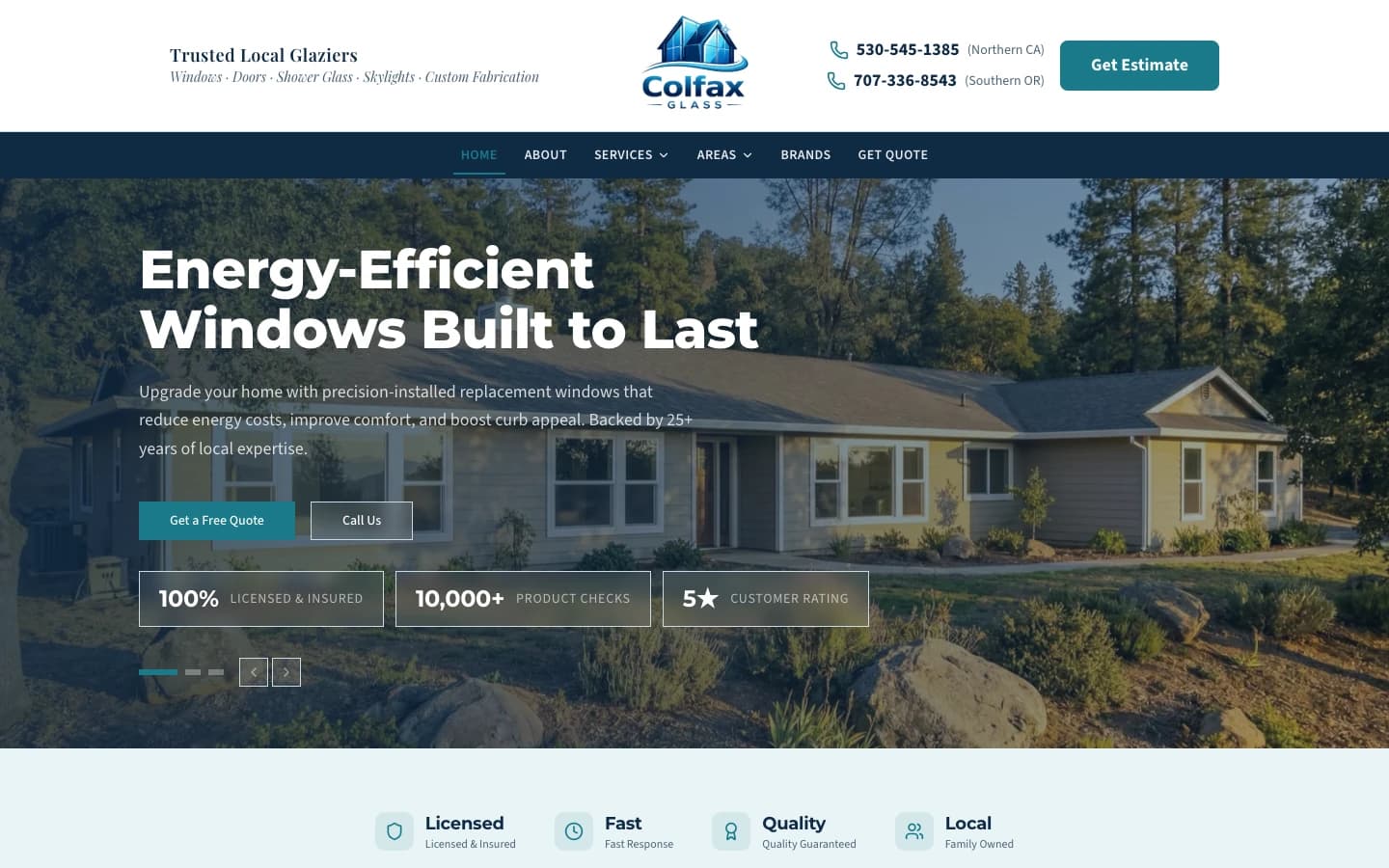
Colfax Glass
Window Installation & Glass Services
+408% Google search clicks · 90-day comparison through Sep 15, 2026
SEO for HVAC companies
Show up for the no-heat call in January, the dead AC in July and the system replacement a homeowner researches for weeks. Google Business Profile, service pages and seasonal content for heating and air companies.
$2,500/moLaunch months
$1,500/moOngoing SEO
HVAC SEO means getting a heating and air conditioning company onto the first screen of Google when local homeowners search for repair, maintenance or a new system. It covers three places those homeowners look: the map pack and your Google Business Profile, the organic results below it, and the pages on your website that turn the visit into a call or an estimate request.
Verlua provides HVAC SEO services for residential heating and cooling contractors, including combined plumbing and HVAC shops. We build pages that match how people search (by service, by city and by season), keep your Business Profile accurate, and report every month on calls, form leads and search clicks. We have not run SEO for an HVAC company yet. The proof on this page comes from other home-service contractors whose sites we built and whose SEO we run.
The first kind is a breakdown: “furnace not turning on”, “AC blowing warm air”, “hvac repair near me”. That person is on a phone in an uncomfortable house and often calls one of the first companies they see in the map pack or in the Local Services Ads above it.
The second is a replacement decision. Someone comparing a heat pump to a gas furnace, or asking what a new system costs, reads for days and checks reviews, financing and license status before asking for a quote. That search is won with useful pages, not with being first on a map.
Good HVAC SEO covers both: a Business Profile and repair pages built for the urgent call, and guides and install pages built for the planned job, which is the bigger ticket.
A no-heat page with a few safe checks (thermostat, breaker, filter) and a same-day service button when those don’t fix it.
A map pack listing with current hours, recent reviews and a phone number someone answers.
An honest comparison of what changes the price for their home, followed by an estimate request.
A plain explanation of the EPA refrigerant rules and what they mean for repairing or replacing an older system.
A combined shop whose profile and site show both trades clearly, with the right license named for each kind of work.
HVAC search demand follows the weather. Cooling searches build with the first hot week, heating searches with the first cold snap, and both jump during a heat wave or a freeze. A page published in the middle of a spike is late, because Google has to find, index and trust a new page before it ranks.
So we work a season ahead. Cooling pages get updated in spring, heating and heat pump pages in late summer and fall, and the shoulder months go to maintenance-plan pages and replacement guides, when homeowners have time to plan and your crews have open slots.
Many companies run both trades and then bury it on one “Plumbing & HVAC Services” page that tries to rank for water heaters, drain cleaning, furnaces and AC at once. Customers and Google both do better with one page per service, grouped under each trade, with the license that covers the work named on the page.
California already draws that line. The CSLB’s C-20 classification covers warm-air heating, ventilating and air-conditioning systems, including water-heating heat pumps. The C-36 plumbing classification covers water supply, waste, gas piping and gas appliances, but not forced warm-air units. Pages built along the same split are easier to trust and easier for Google to match.
Your Business Profile gets one primary category plus additional categories, and Google says categories affect local ranking. We pick the primary one based on where you want the most calls, after looking at your job mix and current rankings.
On many HVAC searches Google shows Local Services Ads first, then the map pack, then organic results. Local Services Ads charge when a customer contacts you rather than per click, and HVAC is one of the eligible home-service categories. They are a fair way to buy calls, but every call costs money and the calls stop when the budget does.
The map pack and organic results carry no per-call fee. Google says local results are based mainly on relevance, distance and prominence (how well known a business is), and that prominence draws on your reviews and the websites that link to you. HVAC SEO works on all three: services and categories that match the search, a service area that matches where you dispatch, and the reviews and links that make you well known in town.
The pages that bring in replacement work answer what homeowners ask before they call: repair or replace, heat pump or furnace, what size system, what changes the price, what financing and rebates exist. Each answer ends at an estimate request, not a dead end.
Refrigerant is one of those questions right now. EPA restrictions on certain HFC refrigerants began January 1, 2025, with compliance dates that vary by equipment type, and owners of older systems want to know what that means for a repair. A clear, accurate page on the topic is the kind your techs can text to a customer and the kind AI answers can quote.
Every one of these pages carries trust details: your license number, EPA Section 608 certification for techs who handle refrigerant, the brands you install, and real photos of your crews and jobs.
The work behind every engagement: the listing first, then the pages, then the reviews and links that build on both.
Primary and additional categories, every service you offer, a service area that matches where you dispatch, hours that match when you answer, and photos of real crews and installs.
A page for each service you want more of: AC repair, furnace repair, heat pumps, ductless mini-splits, ductwork and maintenance plans, each with a direct call and estimate path.
Pages for the towns you actually serve, each with local detail and links to the services offered there, instead of one page that lists every town.
Cooling content updated before summer, heating content before winter, and replacement guides and maintenance-plan pages for the shoulder months.
A short text or email sent to every customer after the job, within Google’s review rules: no incentives, no filtering out unhappy customers, no scripted wording.
Tracked phone numbers and tagged forms, so you can see which pages and listings produce calls, not only clicks.
Calls, form leads, Search Console clicks and rankings by service and city, plus what we are changing next month.
We have not run SEO for an HVAC company yet. These are the closest matches: home-service and contractor sites where we built the same pieces an HVAC site needs, including service pages, city pages, cost guides and short estimate paths. Search Console screenshots are unedited and show search clicks, not booked jobs. 916 Exteriors launched in September 2026, so it appears as a build, not a result.
Window Installation & Glass Services
+408% Google search clicks · 90-day comparison through Sep 15, 2026
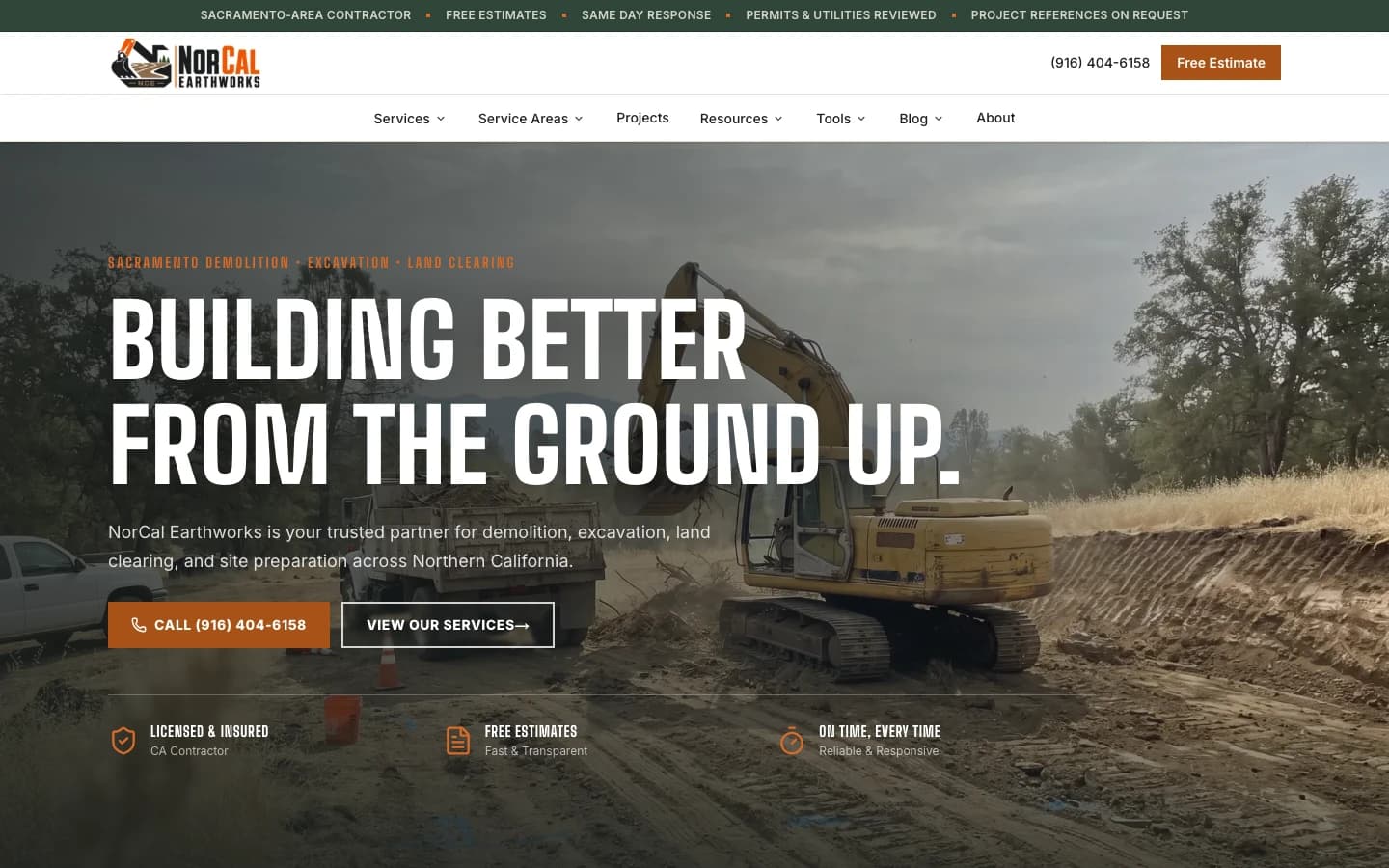
Sacramento Demolition & Land Clearing Contractor
Google search clicks: 25 to 324 · 90-day comparison through Sep 15, 2026

Treasure Valley Gutter Contractor
Ranks for gutter services across Boise and the Treasure Valley
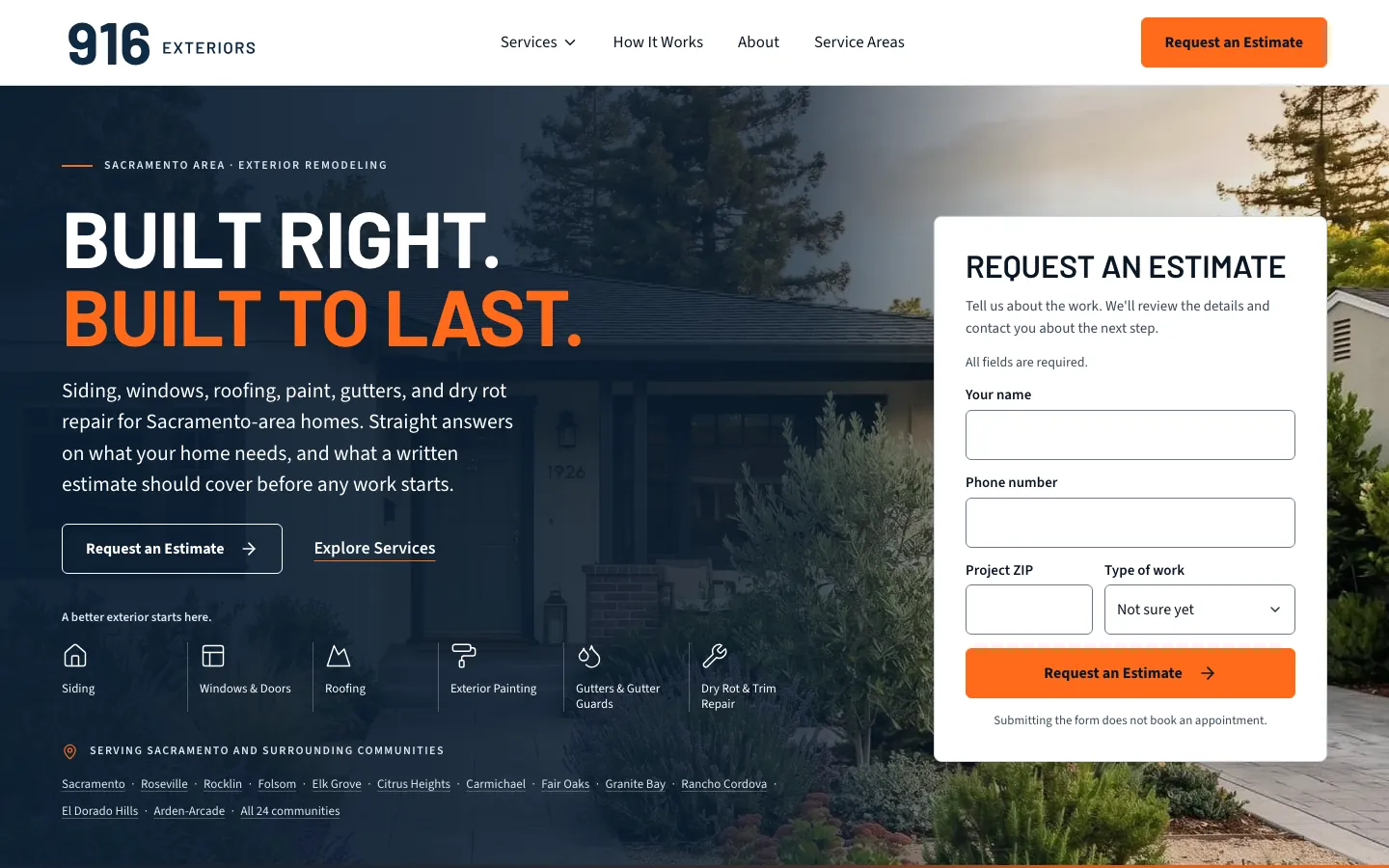
Sacramento Exterior Remodeling
72 city-and-service pages
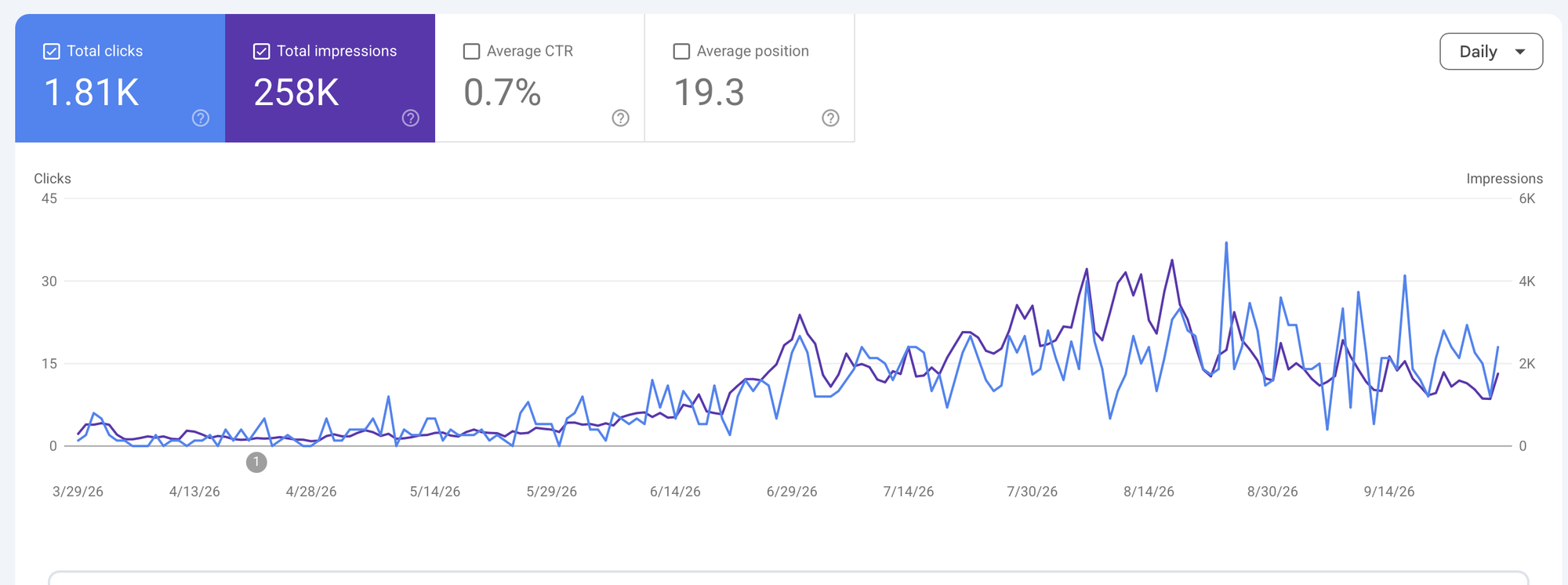
Six months of daily Google search data for four sites Verlua built: a glass contractor, a barbershop, an online store and a marketplace. These are the screenshots, not charts we drew.
 (opens the full-size screenshot)
Window and glass contractor, Placer County
45 → 450Google clicks: first 4 weeks vs. last 4 weeks of the chart
1,811 clicks · 257,832 impressions · Mar 29 – Sep 28, 2026
Read the Colfax Glass case study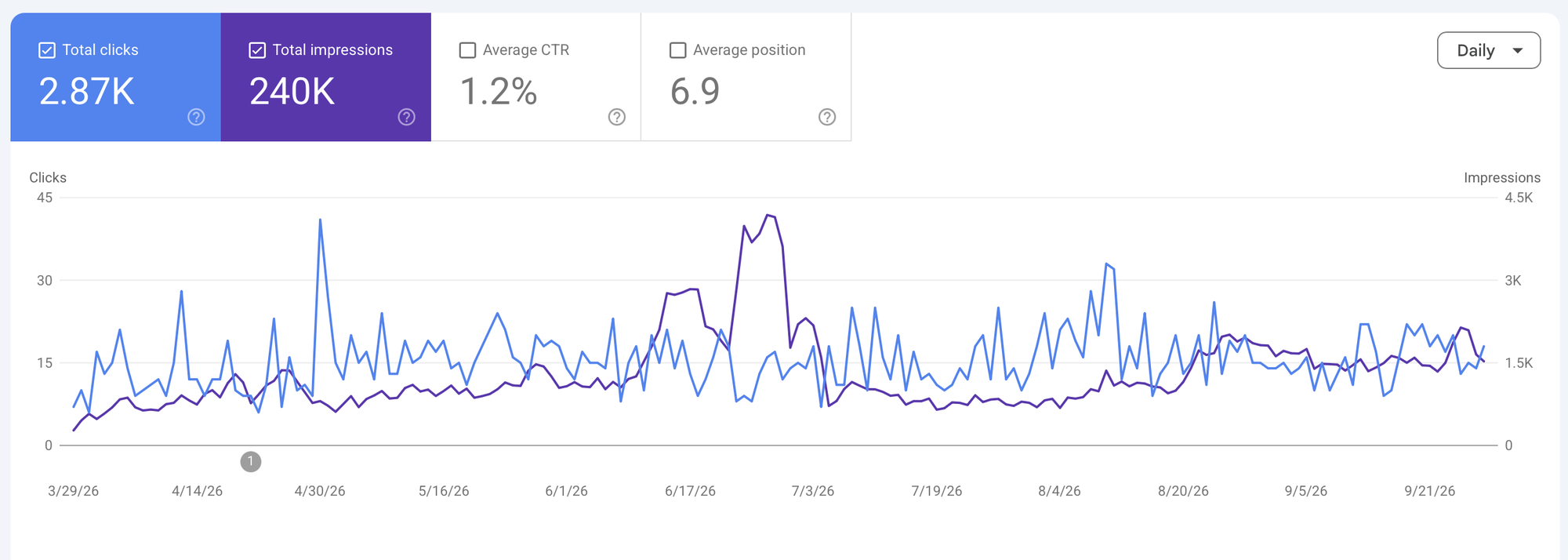 (opens the full-size screenshot)
Sacramento barbershop, three locations
~15 a dayGoogle clicks, steady for six months
2,868 clicks · 240,375 impressions · Mar 29 – Sep 28, 2026
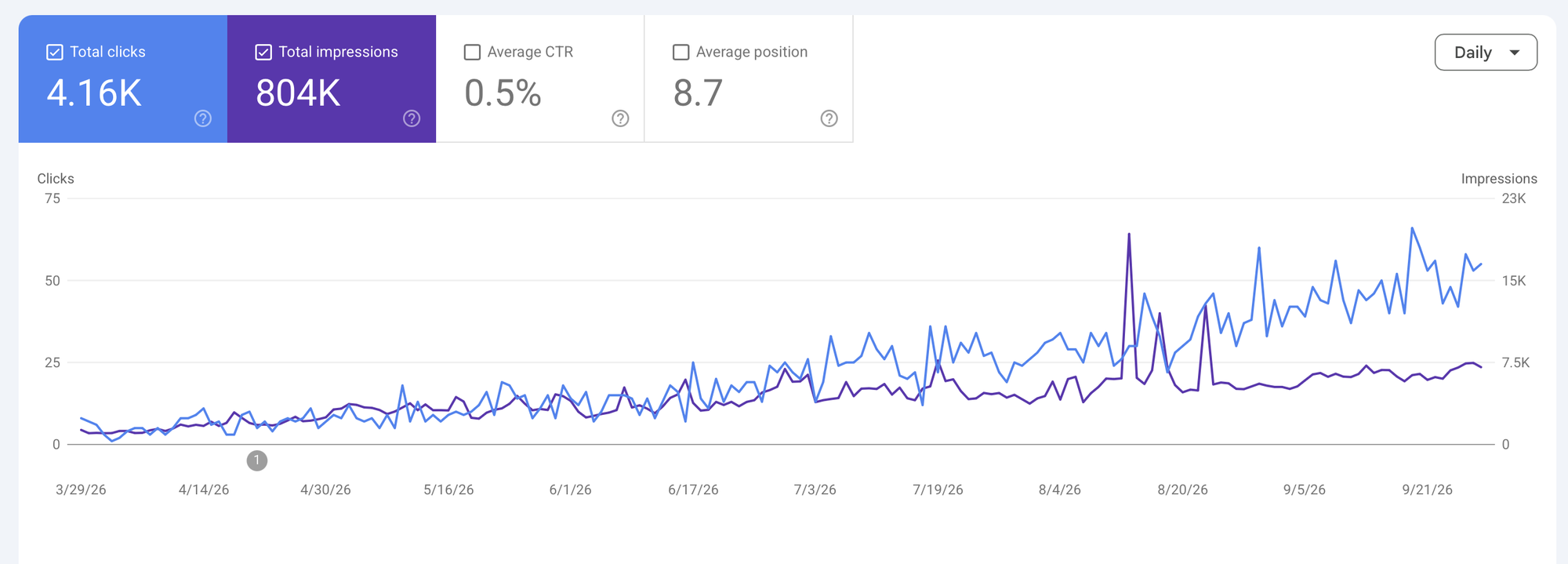 (opens the full-size screenshot)
Raw honey producer and online store, Northern California
162 → 1,328Google clicks: first 4 weeks vs. last 4 weeks of the chart
4,160 clicks · 803,922 impressions · Mar 29 – Sep 28, 2026
Read the NorCal Nectar case study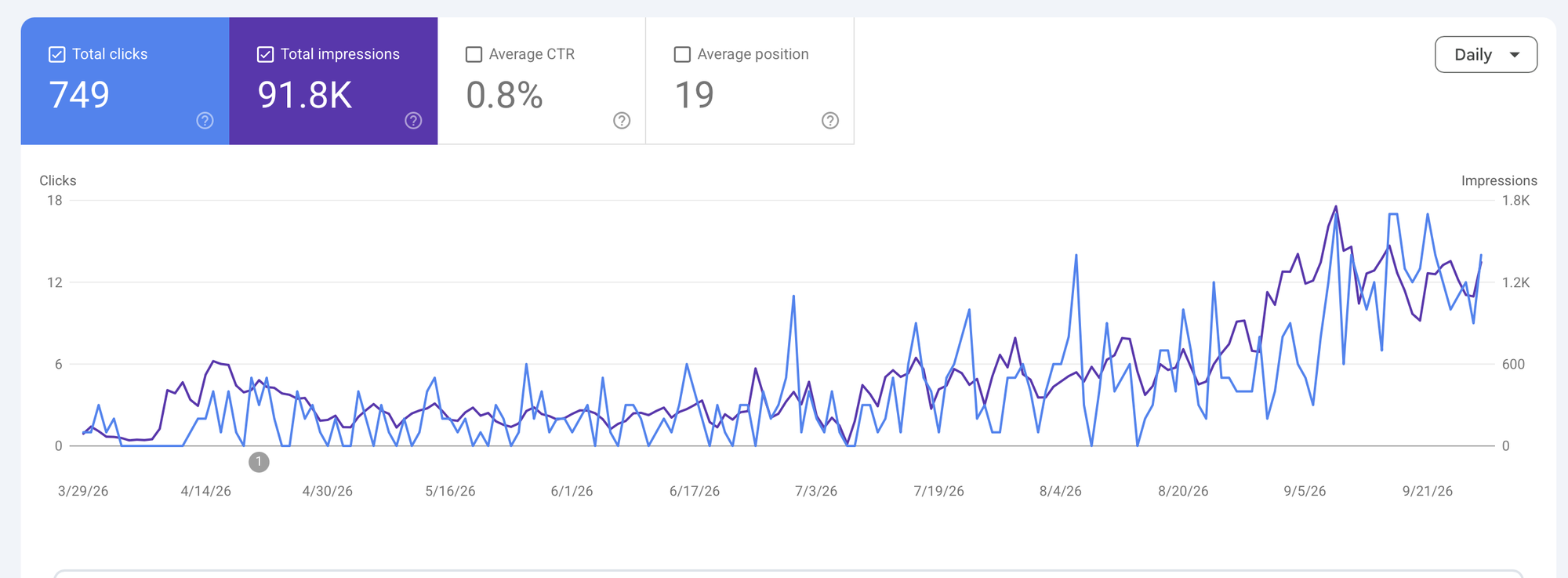 (opens the full-size screenshot)
Heavy equipment marketplace
38 → 304Google clicks: first 4 weeks vs. last 4 weeks of the chart
749 clicks · 91,820 impressions · Mar 29 – Sep 28, 2026
Blue line: clicks, people who came to the site from GooglePurple line: impressions, times the site showed up in results
Screenshots from Google Search Console (Performance report, web search), captured September 30, 2026. Search traffic only, not lead or sales counts. Select any chart to open it full size.
A common redesign + SEO structure is $2,500/mo for the first 2 months (site work included with SEO), then $1,500/mo for the following months of SEO.
Prefer a one-time project invoice instead of monthly billing? We also take project-based website and redesign builds—scoped and quoted after discovery based on pages, integrations, and timeline.
Typical HVAC SEO engagement
Months 1–2
$2,500/mo
Launch: site fixes or rebuild, Business Profile cleanup, core service pages
Month 3 on
$1,500/mo
Ongoing: city pages, reviews, local links, monthly report
One-time website builds: $2,500 – $5,000. HVAC website design
Exact pricing depends on scope, competition, and timeline. These figures reflect what we typically quote for local service businesses; every engagement is confirmed after a free audit or discovery call.
HVAC SEO is the ongoing work of getting a heating and air conditioning company to show up in Google’s map pack and organic results for the services and towns it covers. It includes the Google Business Profile, service and city pages, reviews, links from local sites, and call tracking, so search visibility turns into booked calls you can count.
Three things set it apart: demand that follows the weather, a split between emergency repairs and planned replacements, and high-ticket installs that buyers research for days. An HVAC plan has to schedule work a season ahead, build pages for both kinds of searches, and give replacement buyers the financing, license and brand details they check before calling.
Yes. Each trade gets its own service pages and license details, the Business Profile gets a primary category chosen by where you want the most calls, and the other trade goes in as an additional category. One combined page for everything tends to match no search especially well.
Before the season you care about most. A page published during the first heat wave is competing for attention it can’t get yet. Starting in the shoulder months gives Google time to crawl and index new pages and gives you time to collect reviews before the phones get busy. If you start mid-season, we begin with the Business Profile, where edits show up quickly, and build pages for the next season.
Only for brands you are authorized to sell or service, and check your dealer agreement for rules on how you can use the brand name. For repair searches, one page saying which brands you service usually does the job. Brand pages make the most sense for installs, where some buyers arrive with a brand already in mind.
It can put the offer in front of the right people. Tune-up and maintenance searches come from homeowners who are already thinking about upkeep, so a maintenance-plan page should rank for those searches and spell out what each visit includes, how often you come, member pricing and how to sign up. Repair pages should link to it, since a repair customer is the easiest plan sale you have.
Launch months are $2,500/mo, usually for the first 2 months, while we fix or rebuild the site, build the core service pages and set up tracking. Ongoing HVAC SEO is $1,500/mo after that. If you would rather pay for a new website as a one-time project, builds are quoted in the $2,500 – $5,000 range. Exact scope is confirmed after a free audit.
Not yet, and we won’t pretend otherwise. Our closest work is SEO and site builds for other home-service contractors: a window and glass company, gutter companies, a grading and demolition contractor and a painter. They run on the same local search mechanics as HVAC, and the proof on this page shows those sites with their unedited Search Console data.
Last updated